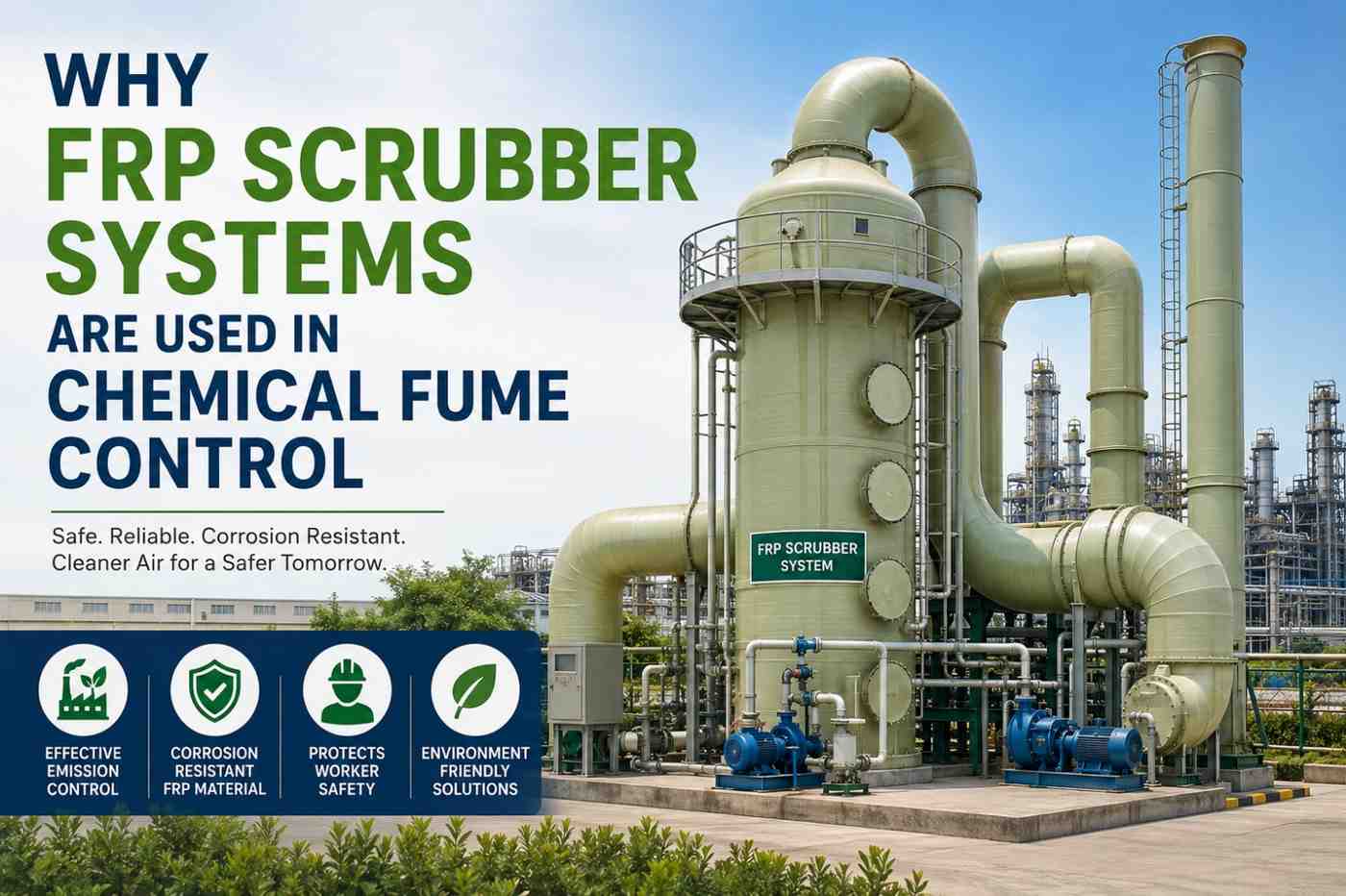
Why FRP Scrubber Systems Are Used in Chemical Fume Control

Learn why FRP scrubber systems are widely used for chemical fume control and how they help improve corrosion resistance, safety, and air quality compliance.

Industrial Chemical Fumes Are More Than Just an Air Quality Problem

Chemical processing plants, petrochemical facilities, metal finishing operations, wastewater treatment plants, and fertilizer manufacturers all generate exhaust gases that cannot be released directly into the atmosphere. Fumes containing hydrochloric acid (HCl), sulfur dioxide (SO₂), ammonia (NH₃), chlorine, and acid mists can damage equipment, endanger workers, and create significant environmental compliance challenges.

As industries face stricter emission regulations and increasing pressure to improve workplace safety, effective chemical fume control has become a critical part of plant operations. This is one reason why FRP scrubber systems have become the preferred solution for treating corrosive industrial emissions.

In this article, we’ll explain how FRP scrubbers work, why fiberglass reinforced plastic is the material of choice for chemical fume control, and how these systems help facilities improve safety, reduce corrosion, and achieve long-term operational reliability.

Industry Snapshot

According to Fortune Business Insights, the global air pollution control systems market was valued at USD 97.47 billion in 2024, with the scrubber segment accounting for USD 31.13 billion of total market revenue. The growth reflects increasing investment in industrial emission control systems worldwide.

Suggested Infographic

Title: Global Air Pollution Control Market Growth

  • Air Pollution Control Market: USD 97.47 Billion (2024)
  • Scrubber Segment: USD 31.13 Billion
  • Expected CAGR: 6.3%
  • Key Drivers: Environmental Regulations, Worker Safety, Corrosion Prevention

Why Chemical Fume Control Is Critical in Industrial Facilities

Industrial exhaust streams often contain highly reactive gases that can create problems far beyond environmental compliance.

The Hidden Risks of Corrosive Chemical Fumes

Many industrial gases attack metal structures, process equipment, electrical systems, and building infrastructure.

Common examples include:

  • Hydrochloric acid fumes causing rapid corrosion of steel equipment.
  • Sulfur dioxide contributing to acid-related degradation.
  • Ammonia vapors creating health and safety concerns.
  • Chlorine gas accelerating material deterioration.

Even low concentrations can create long-term maintenance issues when exposure occurs continuously.

Worker Safety and Environmental Compliance Challenges

Chemical fumes can affect employee health, reduce air quality, and increase operational risks.

Without proper treatment systems, facilities may face:

  • Worker exposure to hazardous chemicals
  • Environmental violations
  • Increased maintenance costs
  • Reduced equipment lifespan
  • Operational downtime

Why Chemical Exposure Remains a Major Industrial Risk

According to OSHA, workers experience more than 190,000 illnesses and approximately 50,000 deaths annually related to chemical exposures. Exposure to hazardous chemicals has been linked to respiratory diseases, cancers, skin disorders, and other serious health conditions.
This highlights why chemical fume control is not simply about compliance—it is a fundamental part of workplace safety and risk management.


What Is an FRP Scrubber System?

An FRP scrubber system is an air pollution control device designed to capture, neutralize, and remove harmful gases from industrial exhaust streams before they are released into the atmosphere.

Unlike traditional steel systems, FRP scrubbers are manufactured using corrosion-resistant fiberglass reinforced plastic, making them ideal for aggressive chemical environments.

Main Components of an FRP Scrubber System

Each component contributes to the overall efficiency of the system.

Typical components include:

  • Capture hoods
  • FRP Ducting Systems
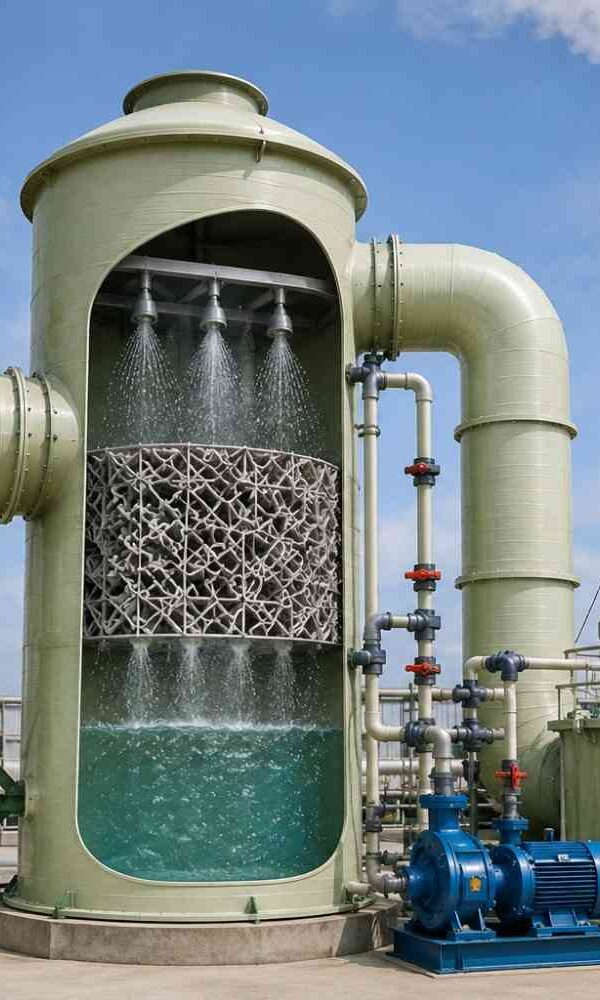
  • Packed-bed scrubber tower
  • Packing media
  • Recirculation tank
  • Pumps and spray nozzles
  • Mist eliminators

Together, these components form a complete chemical fume extraction and treatment solution.

Types of Industrial Scrubbers Used for Chemical Fume Control

The most common designs include:

  • Wet scrubbers
  • Packed bed scrubbers
  • Venturi scrubbers
  • Chemical absorption systems

Among these, packed-bed wet scrubbers are widely used in chemical industries due to their high efficiency in removing corrosive gases.

How FRP Scrubber Systems Remove Corrosive Gases and Vapors

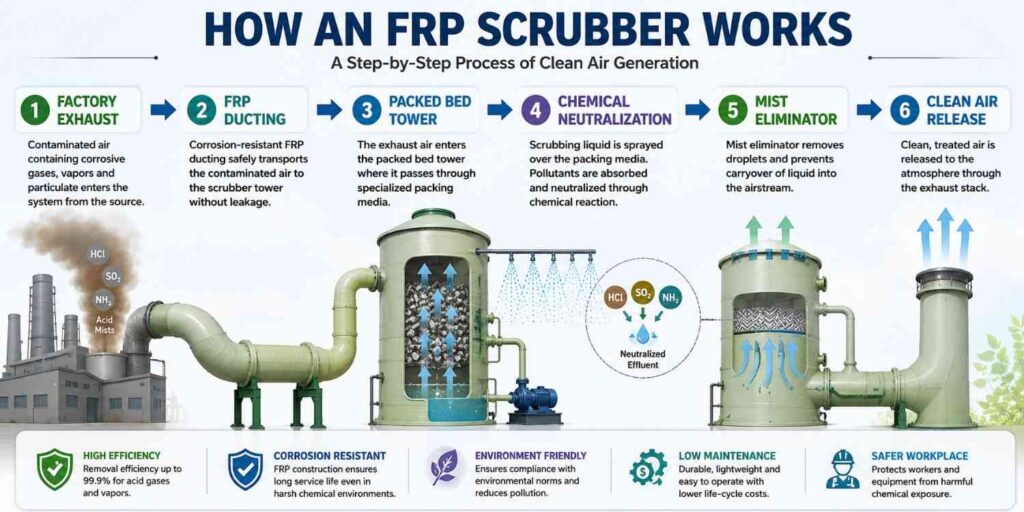
The principle behind a wet scrubber is simple: contaminated air comes into contact with a treatment liquid that absorbs or neutralizes pollutants.

The Wet Scrubbing Process Explained

  1. Contaminated air enters the scrubber.
  2. Gas passes through specialized packing media.
  3. Scrubbing liquid is sprayed over the packing.
  4. Pollutants dissolve into the liquid.
  5. Neutralization reactions occur.
  6. Clean air exits through the exhaust stack.

Common Chemicals Removed by FRP Scrubbers

Industrial scrubbers are commonly designed to treat:

  • Hydrochloric acid (HCl)
  • Sulfur dioxide (SO₂)
  • Ammonia (NH₃)
  • Chlorine gas
  • Acid mists
  • Process vapors

High Removal Efficiency for Acid Gases

Modern packed-bed scrubbers can achieve extremely high removal rates when properly engineered.

Industry data shows that HCl removal efficiencies can reach 99.9%, making wet scrubbers one of the most effective technologies available for acid gas treatment.

Why FRP Is the Preferred Material for Scrubber Construction

A scrubber’s performance depends not only on its design but also on the material used to build it.

Superior Corrosion Resistance in Aggressive Chemical Environments

Unlike carbon steel and many stainless steel grades, FRP resists:

  • Acids
  • Alkalis
  • Corrosive vapors
  • Salt-laden atmospheres

It does not rust, pit, or degrade under typical chemical exposure conditions.

The Financial Impact of Corrosion

According to NACE International, the global cost of corrosion is approximately USD 2.5 trillion annually, equivalent to 3.4% of global GDP.

The same study estimates that modern corrosion-control practices could reduce these losses by 15–35%, saving hundreds of billions of dollars every year.

For facilities handling corrosive gases, material selection directly impacts maintenance costs and equipment lifespan.

Longer Service Life Than Traditional Materials

Many FRP scrubbers remain operational for decades with proper maintenance.

Benefits include:

  • Reduced repair frequency
  • Lower lifecycle costs
  • Improved reliability
  • Less downtime

Lightweight Yet Structurally Strong

Compared to steel, FRP offers:

  • Easier transportation
  • Faster installation
  • Reduced structural support requirements
  • Lower project costs

Custom Fabrication Flexibility

FRP can be fabricated into:

  • Custom scrubber towers
  • Fume extraction hoods
  • Specialized ducting layouts
  • Integrated emission control systems

This flexibility allows systems to be engineered around the facility rather than forcing facilities to adapt to standard equipment sizes.

Experience From the Field: Why One Facility Chose FRP Over Steel

A published industrial case study involving an HCl scrubber at a cogeneration facility provides a practical example of FRP’s long-term value.

The scrubber had been operating for approximately 20 years in an environment characterized by elevated temperatures, high humidity, and chlorine-containing compounds. During a plant expansion review, engineers assessed whether alternative materials would offer better performance.

The conclusion was clear: FRP remained the preferred choice because of its exceptional resistance to corrosion and its proven ability to maintain structural integrity in a highly aggressive operating environment.

This is a common reason why chemical processing facilities continue to specify FRP over conventional metallic materials.

FRP Scrubber vs Stainless Steel Scrubber Systems

Many engineers compare FRP and stainless steel when selecting pollution control equipment.

Feature

FRP Scrubber

Stainless Steel Scrubber

Corrosion Resistance

Excellent

Moderate

Weight

Lightweight

Heavy

Installation Cost

Lower

Higher

Maintenance

Low

Moderate

Chemical Compatibility

Excellent

Varies by Grade

Lifecycle Cost

Lower

Higher

Customization

High

Moderate

For corrosive environments, FRP often delivers the best balance between durability and cost-effectiveness.

Industries That Commonly Use FRP Scrubber Systems

Any facility handling corrosive chemicals can benefit from FRP scrubber technology.

Chemical Manufacturing Plants

Facilities producing acids, solvents, and specialty chemicals rely on scrubbers to manage hazardous emissions.

Related Internal Link:
FRP Chemical Storage Tanks

Petrochemical Facilities

Petrochemical operations use scrubbers to manage process-related emissions and improve environmental compliance.

Metal Finishing and Pickling Operations

Acid cleaning and surface treatment processes generate fumes that require effective capture and neutralization.

Wastewater Treatment Plants

Scrubbers help control odors and corrosive gases generated during wastewater treatment.

Fertilizer and Mining Industries

These facilities often handle sulfur compounds and ammonia-based emissions that require robust treatment systems.

Related Internal Link:
Fiberglass Process Vessels & Equipment

Integrating FRP Scrubbers with Complete Fume Extraction Systems

A scrubber performs best when integrated into a complete emission control solution.

This often includes:

  • Source capture systems
  • Corrosion-resistant ductwork
  • Exhaust fans
  • Scrubber towers
  • Monitoring systems

For maximum efficiency, many facilities combine:

Signs Your Facility May Need an FRP Scrubber Upgrade

Older systems may no longer meet current performance requirements.

Watch for:

  • Visible corrosion around exhaust systems
  • Persistent chemical odors
  • Rising maintenance costs
  • Difficulty meeting emission standards
  • Frequent scrubber repairs

Addressing these issues early can prevent costly downtime and compliance problems.

Frequently Asked Questions About FRP Scrubber Systems

  • Can a single scrubber remove multiple chemical gases?

Yes. Depending on the chemistry involved, a properly designed scrubber can treat multiple contaminants simultaneously, although some applications may require multi-stage treatment.

  • What is the difference between a packed bed scrubber and a venturi scrubber?

Packed bed scrubbers are generally preferred for gas absorption and chemical vapor control, while venturi scrubbers excel at removing particulates.

  • How often should an FRP scrubber be inspected?

Routine inspections are typically conducted monthly, while comprehensive maintenance reviews are performed quarterly or annually depending on operating conditions.

  • What are the signs that a scrubber system is underperforming?

Common indicators include strong chemical odors, increased pressure drop, visible corrosion, and difficulty maintaining emission targets.

  • Is FRP suitable for high-temperature acid fume applications?

Yes, provided the correct resin system is selected during the engineering phase.

  • Does preventive maintenance improve scrubber performance?

Absolutely. Regular inspection of pumps, nozzles, and packing media helps maintain removal efficiency and reduce unplanned downtime.

Conclusion

Chemical fume control is no longer optional for industries handling corrosive gases and hazardous emissions. It is essential for protecting workers, maintaining regulatory compliance, and extending the life of critical plant infrastructure.

FRP scrubber systems have become the preferred solution because they combine exceptional corrosion resistance, high pollutant removal efficiency, lightweight construction, and long-term reliability. Compared to many traditional materials, they offer a more cost-effective and sustainable approach to industrial emission control.

For facilities evaluating new air pollution control systems or upgrading aging equipment, working with an experienced FRP manufacturer can make a significant difference. Custom-engineered scrubber systems, integrated ducting solutions, and corrosion-resistant air pollution control equipment can help deliver safer operations and long-term performance in demanding industrial environments.

Corrosion has become one of the most expensive and persistent challenges across industrial infrastructure. From chemical plants to marine environments, constant exposure to moisture and chemicals causes traditional materials like steel to deteriorate far faster than expected.

Key Article Takeaways

Why traditional metals fail in aggressive environments.

The science behind FRP’s inherent resistance.

Economic benefits: Lower maintenance & longer lifespan.

Real-world applications in Chemical, Water & Marine sectors.

To overcome these issues, industries are increasingly shifting toward Fiber Reinforced Plastic (FRP). Known for its exceptional corrosion resistance, lightweight strength, and long-term durability, FRP is rapidly becoming a preferred material for industrial applications where conventional materials struggle to perform reliably.

The Impact of Corrosion in Numbers

Global industrial studies highlight why material selection is a critical long-term operational decision.

$2.5 Trillion

GLOBAL ANNUAL COST
Equivalent to 3.4% of the world's GDP. Prevention best practices could save up to $875 billion annually.

300% - 400%

LIFESPAN ADVANTAGE
FRP systems last 3–4 times longer than traditional steel in highly corrosive industrial environments.

60% Savings

MAINTENANCE REDUCTION
Facilities switching to FRP report a 60% reduction in maintenance costs over a 10-year period.

70% Lighter

WEIGHT REDUCTION
Significantly lowering transport, handling, and labor costs during large-scale industrial installations.

Why Corrosion Is a Growing Problem

RUSTED-PIPE

Industrial corrosion is more than a surface-level issue. In many facilities, it directly affects operational efficiency, worker safety, and long-term infrastructure reliability. Over time, even coated or galvanized materials begin to fail.

Increased maintenance shutdowns & production loss
Frequent replacement of rusted components
 
Safety risks from weakened walkways & handrails

Real-World Case Study

Proven Success in Harsh Chemical Environments

In a chemical plant in Tamaulipas, Mexico, traditional steel scaffoldings were constantly failing due to aggressive corrosive agents. The facility replaced these expensive, high-maintenance structures with
FRP molded grating platforms.

60% reduction in maintenance costs over 3 years.

Installation time cut in half due to lightweight properties.

Zero corrosion-related downtime since the switch.

modern chemical processing facility using blue FRP pipes or gratings
“The FRP corrosive exhaust ducting has been essentially trouble-free since 2005, even through extreme weather conditions.”
— Facility Engineer, Birck Nanotechnology Center

Why Traditional Materials Fail

While steel and aluminum offer strength, they struggle in aggressive industrial environments where moisture and chemicals are continuously present.

 
Strong but Highly Vulnerable

Carbon steel remains widely used because of its structural strength and relatively lower upfront cost. However, in chemical plants and coastal facilities, it is highly prone to rust formation and chemical attack.

Structural weakening

Surface deterioration

Frequent repainting requirements

Limitations in Chemical & Marine Zones

Stainless steel offers better resistance than carbon steel, but it is not immune. In environments with chlorides or acids, it can still experience severe failure modes.

Pitting & Crevice corrosion

Stress corrosion cracking

Significantly higher project costs

Temporary Protection Only

Galvanized steel’s zinc coating provides temporary protection. Once the layer deteriorates, the underlying steel becomes vulnerable to rapid rust.

Routine inspections required

Recoating and repainting needs

Earlier replacement cycles

What Makes FRP Highly Resistant to Corrosion?

Fiber Reinforced Plastic (FRP) is a composite material made by combining reinforcing fibers with a polymer resin matrix. Unlike metals, FRP does not rely on protective coatings; its inherent material composition makes it naturally resistant to aggressive environments.

Chemical Immunity

Withstands acids, alkalis, and solvents without degradation.

Moisture Proof

Will not rust, rot, or warp even when submerged in saltwater.

Non-Conductive

Safest choice for electrical and utility infrastructure.

High Strength

Comparable strength to steel at 1/4th the weight.

Core Advantages Driving FRP Adoption Across Industries

Industries are not switching to FRP for a single reason. The growing adoption is being driven by a combination of operational, economic, and safety benefits that directly affect long-term plant performance

Lower Maintenance Requirements and Reduced Downtime

Maintenance is one of the largest operational expenses in corrosion-heavy industries. Traditional materials often require continuous inspection, repainting, and repair to prevent deterioration.

FRP significantly reduces these maintenance demands because it:

  • Resists corrosion naturally
  • Requires minimal surface treatment
  • Performs reliably in harsh environments
  • Maintains structural integrity for longer periods

For facilities where shutdowns directly affect production revenue, reducing maintenance frequency can deliver major operational advantages.

Industrial facilities are increasingly prioritizing materials that provide longer service life with fewer interruptions. FRP systems often outlast conventional materials in aggressive environments because they are not susceptible to rust or chemical degradation.

This longer lifespan helps businesses:

  • Reduce replacement frequency
  • Improve asset reliability
  • Lower lifecycle ownership costs
  • Improve long-term infrastructure planning

Corroded structures can become serious safety hazards. Rusted platforms, weakened handrails, and deteriorated access systems increase the risk of workplace accidents.

FRP improves industrial safety because it offers:

  • Slip-resistant surface options
  • Non-conductive properties
  • Corrosion-free structural performance
  • Stable long-term durability

This is one reason why many facilities are replacing metal walkways and access systems with FRP gratings and pultruded profiles.

While FRP may sometimes involve a higher upfront investment than standard steel systems, the long-term economics are often significantly better.

The total cost advantages come from:

  • Lower maintenance requirements
  • Reduced downtime
  • Longer asset lifespan
  • Fewer replacements
  • Lower labor costs

For many industrial facilities, FRP becomes more cost-effective over the full operational lifecycle of the system.

Industries Leading the Shift

Different industries face different corrosion challenges. FRP has gained widespread acceptance because it can be engineered for highly specific industrial conditions while maintaining long-term performance.

Chemical Processing

Storage tanks , process vessels , and scrubber systems.

Wastewater Treatment

Ducting systems, platforms, and piping infrastructure.

Marine & Coastal

Offshore platforms, docks, and desalination facilities.

Power & Utility

Cable trays, cooling towers, and access platforms.

Common FRP Products Used in Corrosion-Intensive Industries

FRP is now used across a wide range of industrial systems where corrosion resistance, lightweight performance, and durability are critical operational requirements.

FRP Gratings and Pultruded Profiles

FRP gratings are widely used for industrial walkways, platforms, drainage covers, and access systems in corrosive facilities.

Their advantages include:

  • Corrosion resistance
  • Slip resistance
  • Lightweight installation
  • Reduced maintenance

Industrial facilities increasingly use FRP gratings and pultruded profiles in chemical plants, offshore facilities, and wastewater environments.

FRP tanks are designed for long-term storage and processing of corrosive chemicals and industrial liquids.

They are commonly used for:

  • Acid storage
  • Water treatment systems
  • Chemical processing
  • Industrial reaction systems

Solutions like FRP tanks and dual laminate equipment help industries improve chemical resistance and operational durability.

Industrial exhaust and ventilation systems are constantly exposed to corrosive gases and fumes. Traditional ducting materials often degrade quickly in these conditions.

FRP ducting systems are increasingly preferred because they offer:

  • Chemical resistance
  • Lightweight installation
  • Long-term structural stability
  • Reduced maintenance requirements

Access systems in corrosive facilities require long-term structural reliability and worker safety.

FRP ladders, platforms, and handrails provide:

  • Corrosion resistance
  • Non-conductive safety
  • Reduced maintenance
  • Long service life in outdoor environments

These systems are widely used across marine, chemical, and utility sectors.

FRP vs Traditional Materials

A side-by-side performance breakdown in corrosive environments.

PROPERTY FRP STEEL GALVANIZED STEEL
Corrosion Resistance Excellent Low Moderate
Maintenance Needs Low High Moderate to High
Weight Lightweight Heavy Heavy
Electrical Conductivity Non-conductive Conductive Conductive
Lifespan Long (30+ Years) Moderate Moderate
Coating Needs Minimal Frequent Periodic

Is FRP the Right Material for Your Industry?

FRP is particularly beneficial for facilities operating in:

  • High-humidity environments
  • Chemical processing areas
  • Coastal and marine locations
  • Wastewater treatment systems
  • Electrically sensitive environments

For many industries, the shift toward FRP is not simply about replacing metal. It is about improving long-term operational reliability while reducing the ongoing burden of corrosion management.

Businesses evaluating corrosion-resistant infrastructure solutions should consider:

  • Environmental exposure conditions
  • Maintenance frequency
  • Lifecycle cost expectations
  • Worker safety requirements
  • Long-term operational goals

Frequently Asked Questions

Why does steel fail in marine and coastal environments?
Steel corrodes quickly in marine environments because constant salt exposure and humidity accelerate rust formation. Over time, this weakens structures and increases maintenance costs.
 
FRP generally lasts much longer than galvanized steel in chemical environments because it resists chemical corrosion naturally. Galvanized steel often requires recoating and repairs over time.
 

Yes. FRP grating is non-conductive, making it safer around electrical systems and utility infrastructure. It is also slip resistant and corrosion resistant.


FRP usually requires much lower maintenance than steel because it does not rust or need frequent repainting. This helps reduce repair costs and operational downtime.


FRP is commonly used in chemical processing, wastewater treatment, oil and gas, marine infrastructure, desalination plants, and power industries where corrosion resistance is critical.


Is FRP the Right Material for Your Industry?

Selecting the right FRP systems can make a significant difference in long-term performance and lifecycle costs. Working with experienced industrial fiberglass manufacturers like Busubait ensures your solution is designed specifically for your operational demands.