Address
Busubait Fiberglass Factory
P.O Box 63113, Dammam 31516
Kingdom of Saudi Arabia
Work Hours
Monday to Friday: 7AM - 7PM
Weekend: 10AM - 5PM

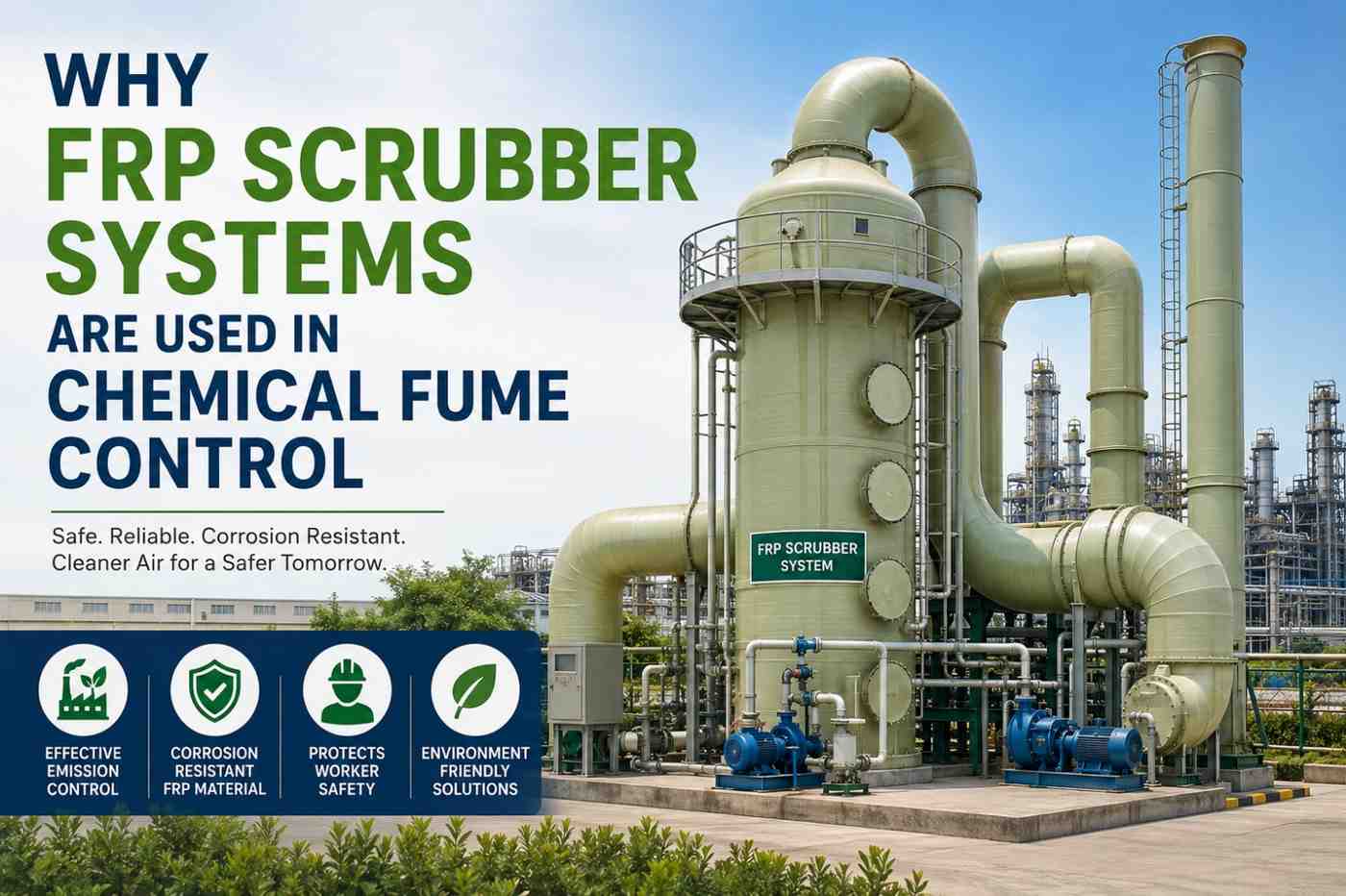
Learn why FRP scrubber systems are widely used for chemical fume control and how they help improve corrosion resistance, safety, and air quality compliance.
Chemical processing plants, petrochemical facilities, metal finishing operations, wastewater treatment plants, and fertilizer manufacturers all generate exhaust gases that cannot be released directly into the atmosphere.
Fumes containing hydrochloric acid (HCl), sulfur dioxide (SO₂), ammonia (NH₃), chlorine, and acid mists can damage equipment, endanger workers, and create significant environmental compliance challenges.
As industries face stricter emission regulations and increasing pressure to improve workplace safety, effective chemical fume control has become a critical part of plant operations. This is one reason why FRP scrubber systems have become the preferred solution for treating corrosive industrial emissions.
According to Fortune Business Insights, the global air pollution control systems market is evolving rapidly.
Market Value (2024)
Scrubber Segment
Expected CAGR
KEY DRIVER
Chemical fumes affect health and air quality. Without treatment, facilities face:
According to OSHA, workers experience more than 190,000 illnesses and approximately 50,000 deaths annually related to chemical exposures.
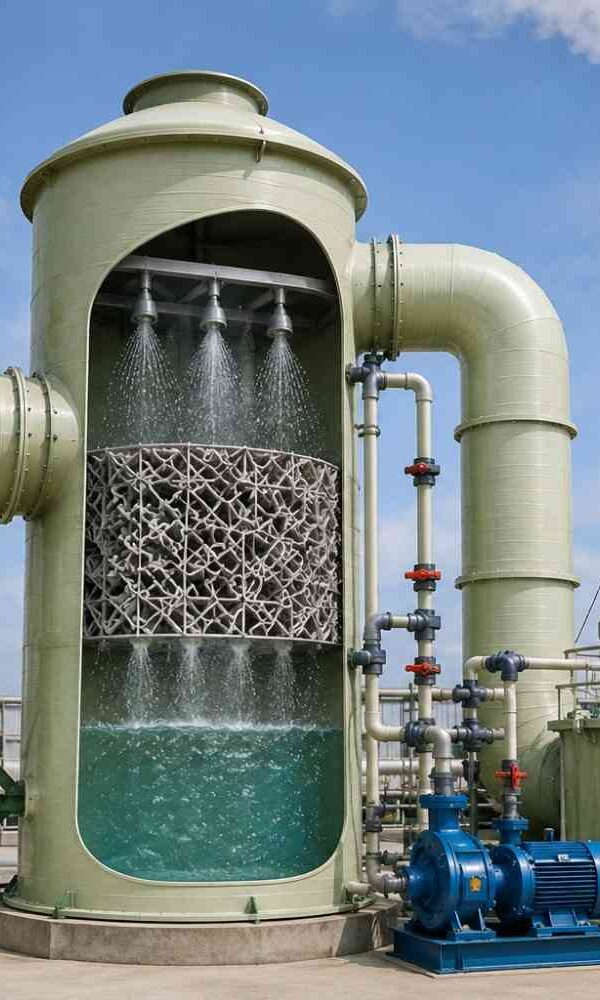
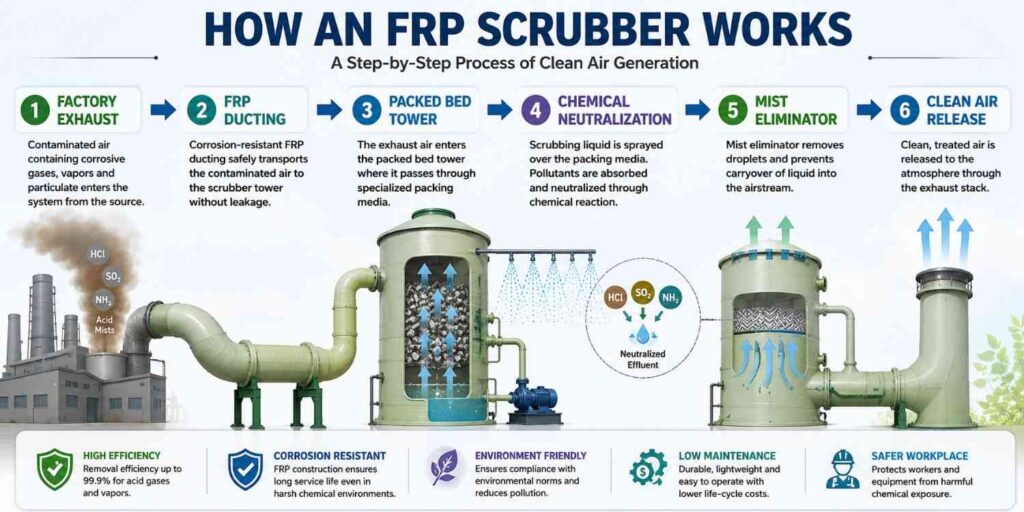
An FRP scrubber system is an air pollution control device designed to capture, neutralize, and remove harmful gases from industrial exhaust streams before they are released into the atmosphere.
Unlike traditional steel systems, FRP scrubbers are manufactured using corrosion-resistant fiberglass reinforced plastic, making them ideal for aggressive chemical environments.
The standard for general chemical absorption.
Widely used for high-efficiency gas removal.
Excel at removing particulates from gas streams.
Tailored for specific neutralization reactions.
Modern packed-bed scrubbers can achieve extremely high removal rates when properly engineered, making them the most effective technology available today.
Resists acids, alkalis, and salt-laden atmospheres without rusting.
Easier transportation and faster installation compared to steel.
Flexibility to create custom towers and ducting layouts.
Operates for decades with minimal maintenance needs.
Annual Global Cost of Corrosion
“Modern corrosion-control practices could reduce these losses by 15–35%, saving hundreds of billions of dollars every year.”
— NACE International Study
| Feature | FRP Scrubber | Stainless Steel Scrubber |
|---|---|---|
| Corrosion Resistance | Excellent | Moderate |
| Weight | Lightweight | Heavy |
| Installation Cost | Lower | Higher |
| Maintenance | Low | Moderate |
| Chemical Compatibility | Excellent | Varies by Grade |
| Lifecycle Cost | Lower | Higher |
| Customization | High | Moderate |
Facilities producing acids, solvents, and specialty chemicals rely on scrubbers to manage hazardous emissions.
Petrochemical operations use scrubbers to manage process-related emissions and improve environmental compliance.
Acid cleaning and surface treatment processes generate fumes that require effective capture and neutralization.
Scrubbers help control odors and corrosive gases generated during wastewater treatment.
Fiberglass Process Vessels & Equipment
These facilities often handle sulfur compounds and ammonia-based emissions that require robust treatment systems.
A scrubber performs best when integrated into a complete emission control solution.
This often includes:
For maximum efficiency, many facilities combine:
FRP Scrubber Systems
FRP Ducting Systems
FRP Air Pollution Control Equipment
Older systems may no longer meet current performance requirements.
Watch for:
Addressing these issues early can prevent costly downtime and compliance problems.
Yes. Depending on the chemistry involved, a properly designed scrubber can treat multiple contaminants simultaneously, although some applications may require multi-stage treatment.
Packed bed scrubbers are generally preferred for gas absorption and chemical vapor control, while venturi scrubbers excel at removing particulates.
Routine inspections are typically conducted monthly, while comprehensive maintenance reviews are performed quarterly or annually depending on operating conditions.
Common indicators include strong chemical odors, increased pressure drop, visible corrosion, and difficulty maintaining emission targets.
Yes, provided the correct resin system is selected during the engineering phase.
Absolutely. Regular inspection of pumps, nozzles, and packing media helps maintain removal efficiency and reduce unplanned downtime.
Chemical fume control is no longer optional for industries handling corrosive gases and hazardous emissions. It is essential for protecting workers, maintaining regulatory compliance, and extending the life of critical plant infrastructure.
FRP scrubber systems have become the preferred solution because they combine exceptional corrosion resistance, high pollutant removal efficiency, lightweight construction, and long-term reliability. Compared to many traditional materials, they offer a more cost-effective and sustainable approach to industrial emission control.
For facilities evaluating new air pollution control systems or upgrading aging equipment, working with an experienced FRP manufacturer can make a significant difference. Custom-engineered scrubber systems, integrated ducting solutions, and corrosion-resistant air pollution control equipment can help deliver safer operations and long-term performance in demanding industrial environments.
Custom-engineered scrubber systems can help deliver safer operations and long-term performance in demanding industrial environments.
