Address
Busubait Fiberglass Factory
P.O Box 63113, Dammam 31516
Kingdom of Saudi Arabia
Work Hours
Monday to Friday: 7AM - 7PM
Weekend: 10AM - 5PM
Address
Busubait Fiberglass Factory
P.O Box 63113, Dammam 31516
Kingdom of Saudi Arabia
Work Hours
Monday to Friday: 7AM - 7PM
Weekend: 10AM - 5PM

Busubait • Industrial chemical storage
Storing acids, alkalis, and process chemicals requires the right tank material. Chemical concentration, temperature, operating conditions, and resin compatibility all affect how an FRP tank should be designed.
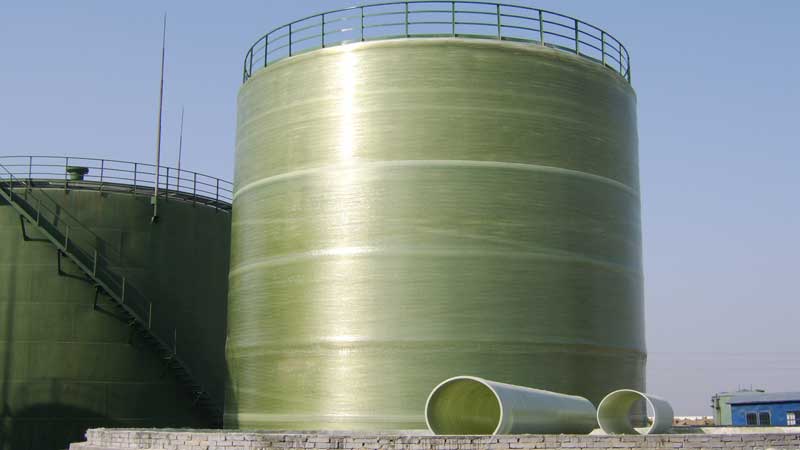
Busubait manufactures FRP chemical storage tanks in Saudi Arabia for chemical processing, water treatment, petrochemical, mining, fertilizer, and other industrial applications. Tanks can be supplied in vertical or horizontal configurations with project-specific capacities, connections, and accessories.
For broader industrial storage requirements, explore our FRP tanks in Saudi Arabia.
Start with compatibility
Chemical storage tanks need more than structural strength. The material in contact with the stored liquid must also be compatible with the chemical and operating conditions.
FRP chemical tanks use fiberglass reinforcement with a suitable resin and corrosion barrier. Depending on the application, the tank construction can be selected around:
A configuration for your process
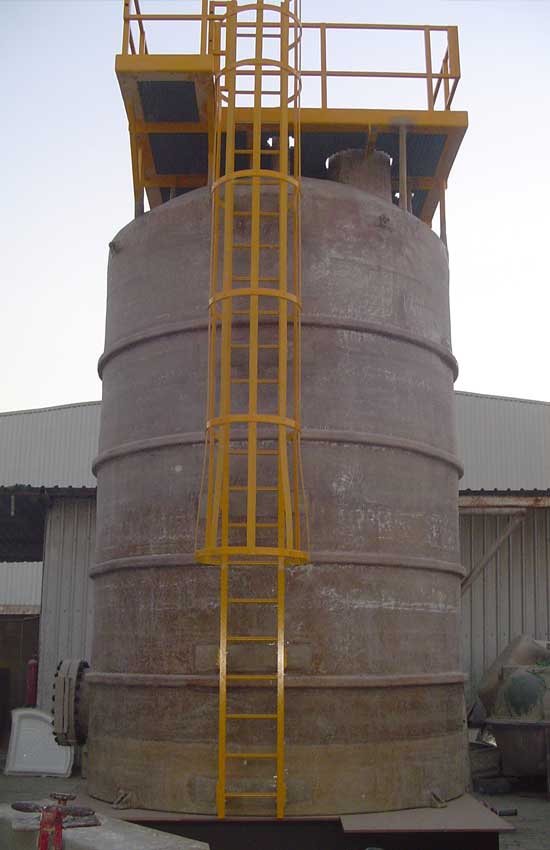
Busubait manufactures chemical storage tanks for different industrial requirements. The exact construction depends on the chemical, concentration, temperature, and project specification.
01
Hydrochloric acid can create serious corrosion problems for unsuitable tank materials.
FRP HCl storage tanks can be manufactured using resin systems selected for the required acid concentration and operating conditions. These tanks are used in chemical processing, galvanizing, metal treatment, and related industrial operations.
02
FRP tanks can also be designed for compatible alkali services such as sodium hydroxide or caustic soda storage.
These tanks are used in applications such as:
Busubait's company profile documents a 375,000-litre sodium hydroxide storage tank supplied for SWCC in Saudi Arabia, showing the company's experience with large industrial chemical-storage projects.
03
Different acids require different material systems. A resin suitable for one acid may not be suitable for another concentration or temperature.
FRP tanks may be considered for compatible services involving chemicals such as hydrochloric acid, sulfuric acid, and other industrial acids. Chemical compatibility should always be confirmed before the tank specification is finalized.
04
Chemical storage tanks can be manufactured in vertical or horizontal configurations.
Vertical tanks are commonly used for bulk storage where floor space needs to be used efficiently. Horizontal tanks may suit sites with height restrictions or specific installation layouts.
Both configurations can include project-specific nozzles, manways, vents, drains, level connections, and supports.
Material selection matters
The resin system plays a major role in chemical resistance.
Depending on the service conditions, FRP chemical tanks may use polyester, vinyl ester, or other specialist resin systems. Selection should consider:
If standard FRP construction is not suitable for the required chemical service, a lined system may be considered.
For more demanding chemical service
Standard FRP is suitable for many chemical-storage applications. Some more demanding services need a separate thermoplastic chemical-contact liner.
A dual laminate tank combines a thermoplastic liner with an FRP structural shell. Materials such as PP, PVC, CPVC, PVDF, or PFA may be considered depending on the chemical environment.
For these applications, see our dual laminate tanks and equipment.
You can also read when to use dual laminate tanks instead of standard FRP for a more detailed comparison.
Across industrial sectors
FRP chemical tanks are used in industrial facilities where corrosion resistance and project-specific storage are important.
Typical applications include:
Connect storage with your plant
Chemical tanks often need to connect with piping, instruments, and access systems around the plant.
Depending on the project, Busubait can supply tanks with features such as:
For connected chemical-transfer systems, Busubait also manufactures FRP piping and fittings.
Built for industrial installations


Industrial project experience
Real project experience matters when the stored liquid is corrosive and the tank is part of an industrial process.
One example documented in Busubait's company profile is a large sodium hydroxide storage tank supplied for SWCC.
This project demonstrates Busubait's experience with large-capacity FRP chemical storage tanks in Saudi Arabia.
Practical material advantages
The main reason industries consider FRP is corrosion resistance. With the correct resin and construction, FRP can provide an alternative to metallic tanks in many chemical environments.
Key benefits include:
01
FRP does not rust like carbon steel.
02
FRP structures are generally lighter than comparable steel tanks.
03
Tank dimensions, connections, and accessories can be adapted to project requirements.
04
FRP does not require the same repainting and rust-control work associated with conventional steel.
FRP is not suitable for every chemical or operating condition. Chemical compatibility, temperature, structural loading, and design requirements should be checked before fabrication.
For a deeper comparison, read Why FRP Tanks Outperform Traditional Tanks in Chemical Storage.
Your questions, answered
FRP tanks can be used for many compatible acids, alkalis, salts, treatment chemicals, and process liquids. Suitability depends on the resin system, chemical concentration, temperature, and operating conditions.
Yes, FRP tanks can be designed for compatible hydrochloric acid service when the correct resin system and construction are selected. Concentration and operating temperature must be considered during material selection.
FRP tanks can be manufactured for suitable sodium hydroxide or caustic soda applications. The resin system and construction should be selected according to concentration, temperature, and project requirements.
Dual laminate may be considered when the chemical service requires a thermoplastic liner for additional chemical resistance. The liner provides the chemical-contact surface, while the FRP outer shell provides structural support.
See our dual laminate tanks for more information.
Yes. Tanks can be manufactured in vertical or horizontal configurations with project-specific capacities, nozzles, manways, vents, drains, supports, ladders, and access platforms.
Resin selection depends mainly on the chemical, concentration, temperature, and operating conditions. These factors should be reviewed before the tank material and construction are finalized.
LET’S DISCUSS YOUR PROJECT
Busubait manufactures FRP chemical storage tanks in Saudi Arabia for acids, alkalis, treatment chemicals, and industrial process liquids.
If your project requires a vertical or horizontal chemical tank, large-capacity storage, or a specialist corrosion-resistant construction, Busubait can manufacture the tank around the project requirements.