Address
Busubait Fiberglass Factory
P.O Box 63113, Dammam 31516
Kingdom of Saudi Arabia
Work Hours
Monday to Friday: 7AM - 7PM
Weekend: 10AM - 5PM

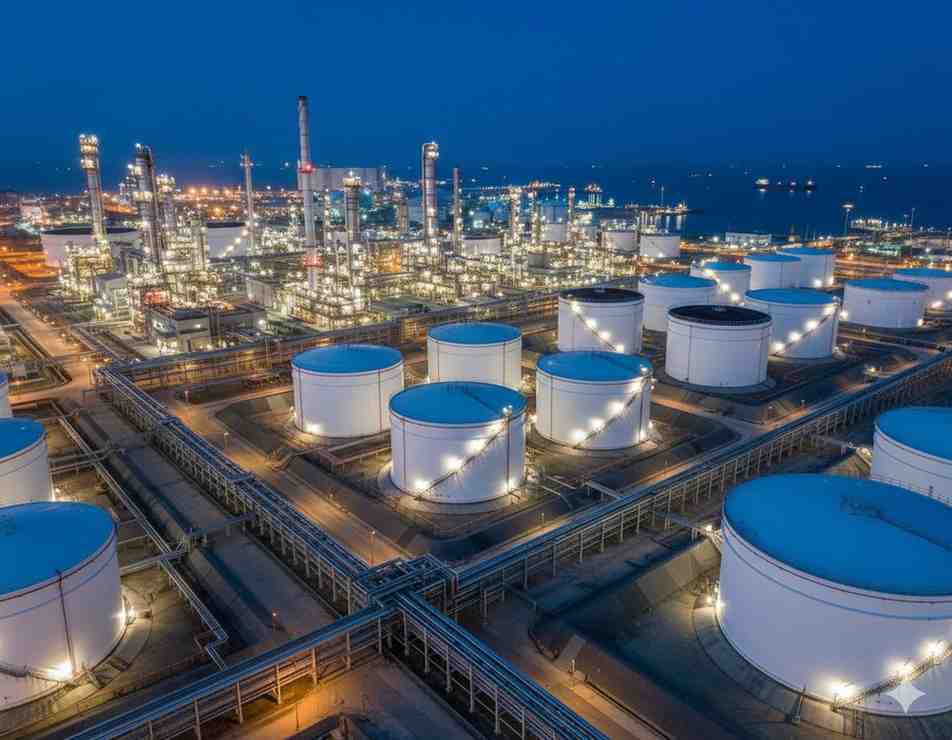
FRP tanks have become the preferred choice for chemical storage due to their corrosion resistance, long service life, and ability to handle aggressive acids and alkalis. They offer a safe, lightweight, and cost-efficient alternative to steel tanks. Perfect for petrochemical, industrial, and water treatment environments.
Industrial facilities across Saudi Arabia face a constant challenge. How do you store aggressive chemicals safely, reliably, and without frequent maintenance shutdowns? Traditional options like steel or concrete tanks often struggle with corrosion, coating failures, and high lifecycle costs.
This is where FRP (Fiberglass Reinforced Plastic) tanks have become the preferred choice for chemical storage. With their corrosion resistance, long service life, and design flexibility, they offer a storage solution that aligns with the operational standards of petrochemical plants, utilities, chemical processing industries, and EPC contractors.
This guide explains why FRP tanks outperform traditional tanks, the types available, how to select the right one, and why Busubait is a trusted FRP engineering partner in Saudi Arabia.
An FRP tank is made by reinforcing high-grade resin with glass fibers to form a strong, corrosion-resistant composite structure. This layered construction gives the tank strength, stability, and long-term resistance to chemicals such as:
In highly corrosive applications, FRP tanks can also be designed as dual laminate tanks, where a thermoplastic liner (PP, PVC, PVDF) provides chemical resistance and FRP provides structural integrity.
Ideal for bulk chemical storage. Commonly used in water treatment plants, desalination, petrochemical facilities, and industrial mixing processes.
Suited for limited headroom, transport applications, and skid-mounted dosing systems.
Used for facilities with layout restrictions or retrofits.
Combines a thermoplastic inner liner (PP / PVC / PVDF) with an FRP outer shell. Best for strong acids, high temperatures, oxidising media, and demanding chemical environments.
Engineered for project-specific capacities, nozzle locations, baffle systems, and integration with FRP access platforms or piping.
FRP is inherently resistant to acids, alkalis, solvents, brine, and chemically treated wastewater.
The material prevents:
This makes FRP tanks a safe and stable solution for storing aggressive chemicals such as HCl,
H₂SO₄ (up to 98%), NaOH, and process effluents.
FRP tanks can operate reliably for 20–30 years when designed correctly.
They do not require internal recoating, periodic metal repairs, or corrosion-related maintenance
common in steel tanks.
FRP tanks weigh significantly less than steel or concrete tanks. This results in:
This lightweight advantage is particularly valuable in remote Saudi industrial locations or
brownfield plants.
FRP is non-conductive, chemically inert, and engineered to minimize leak risks.
Its seamless, joint-free construction helps maintain containment integrity even under demanding
conditions.
Although lightweight, FRP has excellent tensile strength.
This makes it suitable for large-volume tanks, elevated tanks, and applications with moderate
pressure requirements.
FRP tanks can be tailored to:
→ Busubait also manufactures FRP reaction and mixing vessels: Read More About Busubait FRP Reaction Mixing Vessels
Initial costs may be comparable to steel, but long-term savings come from:
Over a 10-year period, FRP tanks typically offer one of the lowest total costs of ownership.
FRP tanks help prevent chemical leaks, protect soil and groundwater, and support safe long-term
operations. Their longer lifespan also means reduced material consumption and fewer replacements.
FRP tanks engineered for Saudi industrial conditions can significantly reduce downtime, maintenance, and safety risks. Get expert guidance for your chemical storage needs.
A Saudi-based industrial plant storing sodium hydroxide (NaOH) was experiencing frequent corrosion and coating failures in its steel tank. This resulted in repeated shutdowns, high maintenance costs, and operational risk.
Designed a vertical FRP chemical storage tank with a vinyl ester corrosion barrier.
Integrated FRP platforms and access ladders for safe operation.
Provided on-site installation support and inspection guidelines.
(Outcome described generically to avoid sharing confidential project data.)
Identifying the Cheminal & Operating Condition
FRP tanks must be engineered properly to perform well.
Look for partners with:
FRP tanks usually offer the best lifecycle economics.
Founded in 1997 in Dammam, Busubait is one of Saudi Arabia's longstanding FRP solution providers.
Quality systems govern every stage from resin selection to lamination and curing.
Engineered for aggressive chemicals such as HCl, H₂SO₄, NaOH, chemical effluents, and process liquids.
Tanks range from 100 gallons to 500,000 gallons, designed to handle Saudi climate and industrial environments.
Approvals and experience with regional leaders across petrochemical, water treatment, utilities, and government projects.
Complete system compatibility with FRP gratings, handrails, platforms, walkways, and process vessels.
FRP tanks have become the preferred storage solution for acids, alkalis, solvents, and industrial wastewater. Their corrosion resistance, long service life, lightweight construction, and low lifecycle cost make them far more reliable than traditional steel or concrete tanks.
For industries across Saudi Arabia, choosing the right FRP manufacturer is as important as choosing the material itself. With decades of expertise, ISO-certified processes, and proven performance in harsh environments, Busubait is a trusted partner for engineered FRP tank solutions.
Ready to discuss your project?
Get expert guidance tailored to your chemical, capacity, and site conditions.
FRP resists corrosion, prevents leaks, and eliminates the need for frequent recoating. This reduces downtime and offers longer service life than steel tanks.
Glass fiber reinforcement with resin systems such as polyester, vinyl ester, or epoxy vinyl ester. Optional liners like PP, PVC, or PVDF for dual laminate tanks.
FRP may have a similar or slightly higher upfront cost. However, it significantly reduces corrosion repairs, internal recoating, unplanned downtime, and replacement frequency, making it more cost-effective across the lifecycle.
FRP is not suitable for very high-pressure storage or extremely high temperatures. Correct resin selection and engineering are essential for long-term performance.
A well-designed FRP tank typically lasts 20–30 years, especially when paired with the right resin and proper maintenance.
Yes. Busubait engineers FRP and dual laminate tanks based on your chemical type, temperature, concentration, and storage conditions.
