Address
Busubait Fiberglass Factory
P.O Box 63113, Dammam 31516
Kingdom of Saudi Arabia
Work Hours
Monday to Friday: 7AM - 7PM
Weekend: 10AM - 5PM

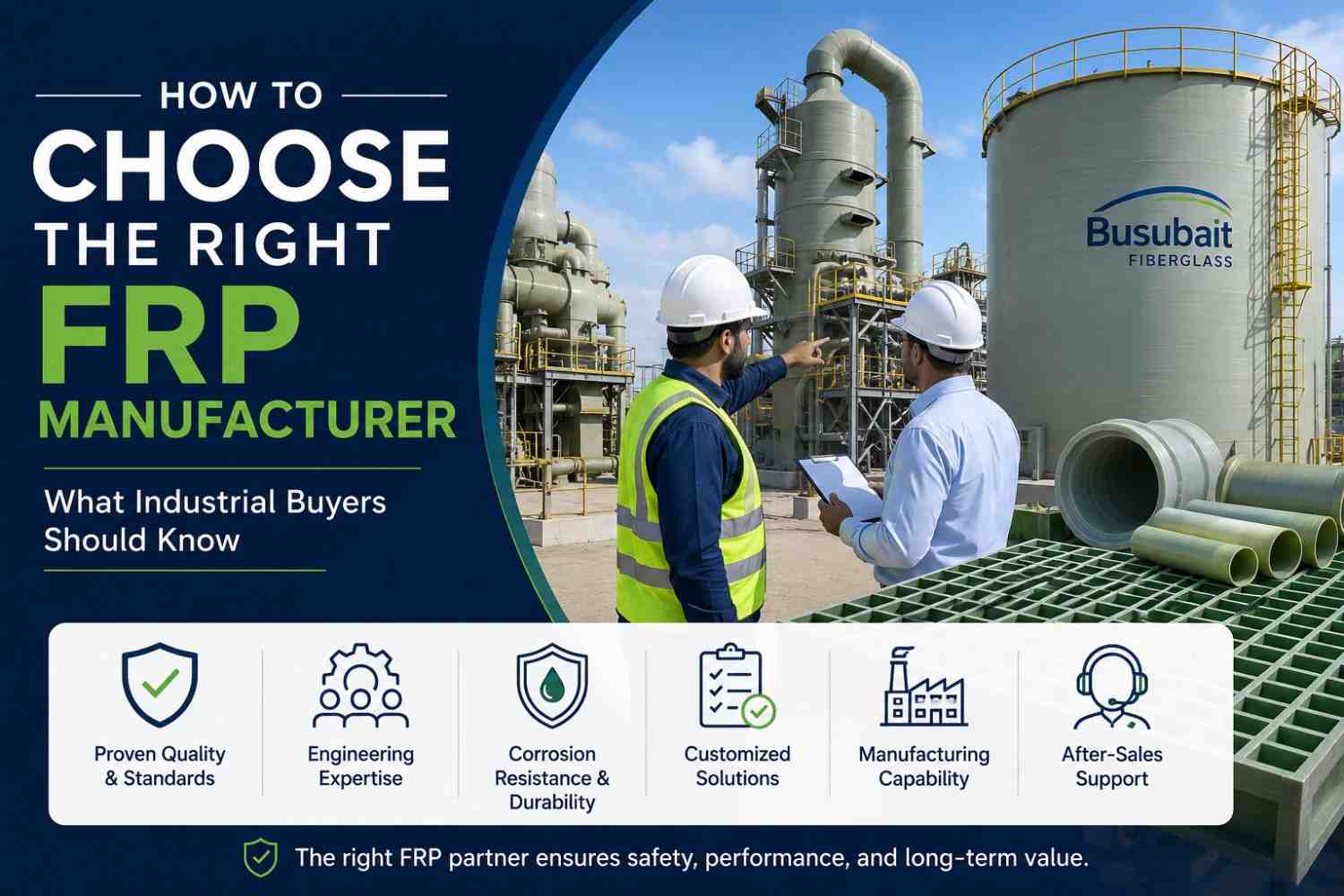
Industrial buyers today have no shortage of FRP suppliers to choose from. The challenge is identifying which manufacturer can consistently deliver safe, durable, and application-specific products for demanding industrial environments.
A poorly manufactured FRP tank, ducting system, grating platform, or process vessel may appear acceptable during installation, but performance issues often emerge later. Problems like chemical attack, structural weakness, premature cracking, poor fitment, and repeated maintenance can increase operational costs and create long-term reliability concerns.
That is why selecting the right FRP manufacturer should never be based on pricing alone. Industrial buyers need to evaluate engineering capability, material expertise, manufacturing standards, project experience, quality control systems, and after-sales support before finalizing a supplier.
The growing demand for corrosion-resistant industrial materials is one reason the global FRP market continues to expand rapidly. The Glass Fiber Reinforced Plastic (GFRP) market was valued at approximately USD 40.27 billion in 2024 and is projected to reach USD 78.14 billion by 2035. Industries such as petrochemicals, water treatment, power generation, desalination, mining, and infrastructure are increasingly investing in engineered FRP systems because of their durability and lifecycle advantages.
In this guide, we explain what industrial buyers should look for when evaluating an FRP manufacturer, the common mistakes procurement teams should avoid, and why lifecycle performance matters more than short-term cost savings in industrial applications.
Fiberglass Reinforced Plastic (FRP) products are widely used in corrosive industrial environments because of their resistance to chemicals, moisture, and atmospheric corrosion. However, not all FRP products are manufactured to the same standard.
Industrial buyers often evaluate suppliers based on product pricing and delivery schedules, but manufacturing quality directly affects long-term performance, safety, and maintenance requirements.
The quality of an industrial FRP product depends on several engineering and manufacturing factors that influence durability and reliability in real operating conditions:
In critical applications like FRP chemical storage tanks, FRP ducting systems, scrubbers, piping, and process vessels, poor manufacturing standards can create operational and safety risks.
The financial impact of corrosion alone highlights why industrial buyers are shifting toward engineered FRP solutions. According to NACE International, the global annual cost of corrosion is estimated at USD 2.5 trillion, equivalent to nearly 3.4% of global GDP.
In the petrochemical refining industry in the United States alone, corrosion-related costs are estimated at USD 3.7 billion annually.
For many industrial facilities, choosing the wrong FRP supplier becomes far more expensive over time than selecting a higher-quality engineering partner from the beginning.
Choosing an industrial FRP supplier requires more than reviewing a quotation. Buyers should evaluate the manufacturer’s technical capability, manufacturing standards, project experience, and support infrastructure.
A reliable FRP manufacturer should function as an engineering partner — not just a fabricator.
A company that primarily manufactures decorative or light-duty fiberglass products may not understand the performance requirements of industrial applications.
Request case studies, project photographs, client references, product test reports, vendor approvals, and installation records.
Verify ISO certifications, quality management systems, inspection procedures, and resin compatibility documentation.
Evaluate the manufacturer's understanding of resin systems, glass fiber specifications, and reinforcement ratios.
Assess in-house design support, structural calculations, shop drawings, and design optimization services.
Evaluate manufacturing facility size, workforce capability, equipment availability, and project execution systems.
One of the first things buyers should evaluate is the manufacturer’s experience in industrial FRP fabrication.
Industrial projects often involve:
Manufacturers with experience in sectors such as petrochemicals, desalination, wastewater treatment, mining, and utilities are usually more familiar with these challenges.
It is also important to assess whether the supplier has experience with your specific product category, such as:
Experienced manufacturers can often identify design concerns early and recommend material improvements before fabrication begins.
A strong project portfolio is one of the best indicators of manufacturing capability.
Before finalizing a supplier, industrial buyers should request:
Manufacturers involved in large industrial projects typically have stronger documentation systems and better process control. Companies trusted by major industrial organizations often go through strict vendor qualification procedures before approval.
Busubait has supplied fiberglass products and engineered solutions to industries including petrochemical, utility, infrastructure, and water treatment sectors. Its client portfolio includes companies such as Saudi Aramco, SABIC, SWCC, Ma’aden, Saudi Electricity Company, Baker Hughes, and Siemens.
Project experience becomes especially important when buyers require custom fabrication or application-specific engineering support.
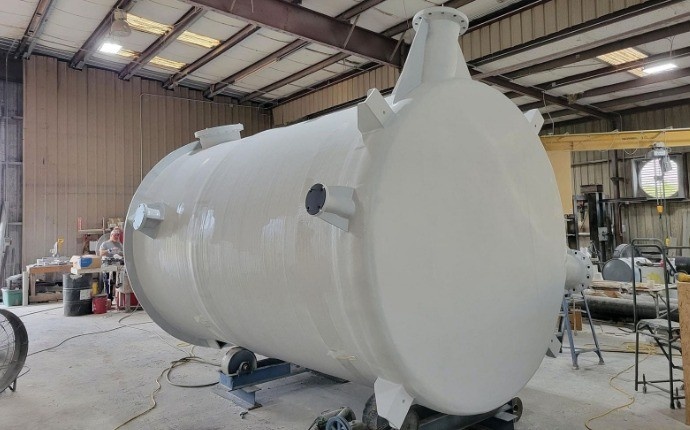
Industrial-grade FRP products should be backed by quality assurance systems and proper testing procedures.
Buyers should verify whether the manufacturer follows recognized manufacturing and quality standards.
Key things industrial buyers should evaluate include:
Manufacturers should also be able to provide supporting technical documents such as:
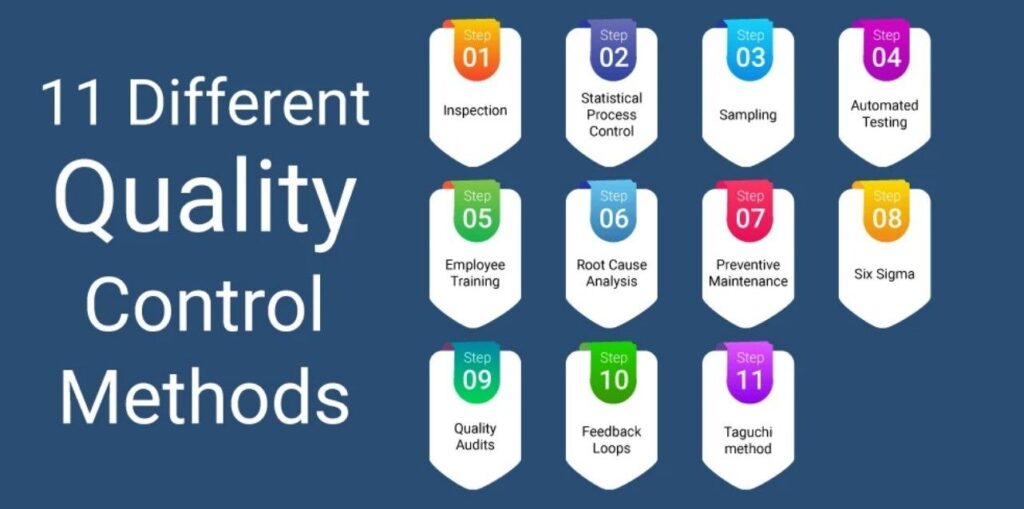
Busubait operates with ISO-certified quality systems and industrial manufacturing processes for fiberglass fabrication. Industrial buyers should avoid suppliers that cannot provide technical documentation or rely heavily on generic product claims without supporting data.
Many industrial buyers focus on dimensions and pricing while overlooking one of the most important factors in FRP performance — material selection.
The resin system used in an FRP product directly affects:
Incorrect resin selection is one of the most common causes of premature FRP failure. According to industry investigations into FRP failures, inconsistent glass content, incomplete curing, poor resin quality, and fabrication defects are frequent contributors to structural weakness and premature product deterioration.
| Resin Type | Best Applications | Key Advantages | Temperature Range |
|---|---|---|---|
| Vinyl Ester Resin | Highly corrosive chemical environments | Superior chemical resistance, excellent durability | -40°C to 120°C |
| Polyester Resin | General industrial applications | Cost-effective, good all-around performance | -20°C to 80°C |
| Epoxy-Based Systems | Specialized structural performance | High strength, excellent adhesion, superior durability | -30°C to 100°C |
A qualified FRP engineering company should understand how operating conditions influence resin selection.
Industrial buyers should ask:
The right manufacturer should be able to recommend suitable material combinations rather than offering a generic one-size-fits-all solution. Applications like fiberglass tanks and dual laminate equipment especially require careful resin compatibility evaluation because they are frequently exposed to aggressive chemicals and corrosive environments.
FRP performance is also affected by reinforcement quality and manufacturing consistency.
High-quality fiberglass reinforcement improves:
Manufacturers using poor-quality raw materials often produce products with:
"A lot of FRP suppliers are lower priced because they use a poorer quality resin. This issue doesn't show up immediately, but over time, the panels or FRP pieces may chip or break." — Dave Anderson, Regional Sales Manager at Fibergrate
Industrial buyers should ask about:
Even small differences in manufacturing discipline can significantly affect long-term product performance.
Not every industrial project can use standard off-the-shelf products. Many facilities require custom-engineered FRP solutions designed around:
This is where engineering capability becomes a major differentiator.
Industrial environments rarely operate under identical conditions. For example, two chemical plants may require storage tanks of similar size, but different resin systems depending on the chemicals involved.
Likewise, an FRP ducting system used in a high-temperature exhaust application will require different engineering considerations than a standard ventilation system.
Manufacturers with in-house engineering support can provide:
This level of engineering support helps reduce installation issues and long-term maintenance risks. For specialized industrial projects, buyers should also assess whether the manufacturer can support products like industrial fiberglass enclosures and custom-engineered process equipment.
The manufacturing method also affects FRP product performance. Different processes are suitable for different applications.
Commonly used for producing structural profiles with consistent cross-sections. Ideal for gratings and structural applications.
Widely preferred for manufacturing pipes and tanks with high structural strength. Excellent for pressure vessels.
Often used for custom-engineered industrial equipment and complex geometries. Provides flexibility for unique designs.
Supports controlled production and improved surface finish quality. Ideal for precision components.
Production capability is often overlooked during supplier evaluation. A manufacturer may provide competitive pricing but still struggle to meet delivery timelines for large industrial projects.
For industries operating under shutdown schedules or EPC timelines, delays can create major operational and financial consequences.
Industrial buyers should evaluate:
A well-equipped manufacturer should be capable of handling both standard production and custom fabrication requirements simultaneously.
Delayed deliveries can affect:
In some industries, even short delays can result in significant financial losses. This is why experienced industrial suppliers usually maintain stronger project management systems and manufacturing planning processes.
Manufacturers with broad industrial capability often support multiple product categories including tanks, process vessels, piping systems, ducting systems, structural profiles, and corrosion-resistant process equipment.
A reliable FRP manufacturer should continue supporting the customer even after product delivery.
Industrial buyers should evaluate whether the supplier offers:
Manufacturers confident in their product quality are generally more willing to provide long-term technical support.
Facilities that implement proper FRP maintenance programs often achieve 25–30 years of service life from FRP tank assets, compared to significantly shorter operational life when maintenance and material quality are compromised.
Before finalizing a supplier, buyers should conduct a technical and operational evaluation. Here are some important questions industrial procurement teams should ask:
This question helps you understand the manufacturer’s technical expertise and whether they’re willing to customize solutions based on your specific needs rather than offering generic products.
Reliable manufacturers should have comprehensive documentation showing how their products perform with specific chemicals you’ll be using. This is critical for ensuring long-term durability.
Look for ISO certifications, industry-specific standards, and documented quality management systems that demonstrate their commitment to manufacturing excellence.
Professional manufacturers should provide detailed engineering documentation to support your installation and ensure the product meets your specifications.
References from similar industrial projects provide valuable insights into the manufacturer’s capability and reliability. Don’t hesitate to contact these references directly.
Different manufacturing methods (pultrusion, filament winding, hand lay-up, RTM) are suited for different applications. Ensure their methods align with your requirements.
For industrial projects with tight schedules, lead times are critical. Understand their standard timelines and whether they can accommodate expedited orders.
Good manufacturers provide installation support to ensure proper commissioning and minimize fitment issues during your project.
Comprehensive warranty and after-sales support demonstrate the manufacturer’s confidence in their products and commitment to your long-term success.
These questions help buyers assess whether the supplier truly understands industrial applications or simply offers generic fabrication services.
Many procurement problems occur because buyers focus too heavily on initial pricing. While cost is important, selecting the cheapest supplier can create long-term operational issues.
Low-cost suppliers may reduce manufacturing costs by using lower-grade resins, reducing reinforcement thickness, skipping quality testing, and using inconsistent curing procedures. The result is often reduced product lifespan and higher maintenance costs
FRP products exposed to incompatible chemicals can deteriorate quickly. Industrial buyers should always confirm that the resin system is suitable for the intended operating environment.
Some manufacturers can fabricate products but lack engineering expertise. This becomes risky for applications involving structural loading, chemical processing, pressure conditions, complex layouts, and customized dimensions.
Reliable manufacturers should be able to provide test reports, material certifications, inspection documentation, and engineering calculations. Buyers should avoid relying solely on marketing claims
Industrial buyers are increasingly shifting toward lifecycle-based procurement decisions.
A low-cost FRP product may appear attractive initially, but repeated maintenance, corrosion issues, or premature replacement can significantly increase total ownership cost.
High-quality industrial FRP products often provide:
Potential Cost Reduction in Installation
Maximum Pressure Capability
Operating Temperature Range
Service Life with Proper Maintenance
Constructing industrial platforms, ladders, and structural systems using FRP instead of steel can reduce installation costs by more than 40% because of easier transportation and assembly.
FRP pipes are also capable of handling pressures up to 20 MPa and temperatures ranging from -40°C to 120°C, making them suitable for demanding industrial environments.
In many industrial facilities, maintenance-related shutdowns cost far more than the initial difference in procurement price. This is why experienced industrial buyers prioritize long-term reliability and engineering quality over short-term cost savings.
Industrial FRP applications require more than basic fabrication capability.
Experienced FRP engineering companies typically offer:
Manufacturers with exposure to industries such as petrochemicals, water treatment, desalination, mining, and utilities are generally more familiar with harsh operating conditions and industrial compliance requirements.
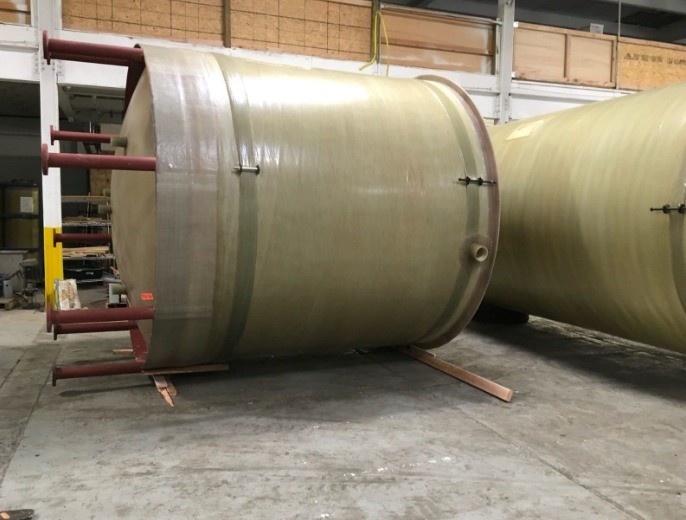
Busubait manufactures a wide range of industrial fiberglass products including storage tanks, process vessels, gratings, piping systems, ducting systems, enclosures, ladders, handrails, and custom-engineered FRP solutions for industrial applications.
Its manufacturing and engineering capabilities support projects across sectors where corrosion resistance, durability, and long-term reliability are critical.
Selecting the right FRP manufacturer directly affects product performance, operational reliability, maintenance requirements, and long-term project value.
Industrial buyers should evaluate manufacturers based on:
The right supplier does more than manufacture products. They help industrial facilities reduce corrosion risks, improve operational reliability, and achieve better lifecycle performance.
As industrial environments become more demanding, buyers increasingly need manufacturing partners that understand both fabrication and engineering requirements.
For projects involving corrosive environments, custom fabrication, or industrial infrastructure, working with an experienced FRP engineering company can help improve long-term reliability and reduce maintenance concerns. Busubait supports industrial sectors with engineered fiberglass solutions including storage tanks, ducting systems, gratings, piping systems, process vessels, and custom FRP fabrication for demanding applications.
Industrial buyers should evaluate a manufacturer’s industry experience, engineering capability, certifications, resin expertise, project portfolio, and quality assurance systems before making a decision.
Most industrial buyers look for ISO-certified manufacturing systems, quality control documentation, and product testing records related to structural performance and chemical compatibility.
Lower-priced FRP products may use lower-grade resins, weaker reinforcement materials, or inconsistent manufacturing processes, which can affect long-term durability and performance.
FRP products are widely used in petrochemical plants, water treatment facilities, desalination projects, mining operations, marine environments, power plants, and wastewater treatment systems.
Yes. Many industrial FRP manufacturers provide custom fabrication based on chemical exposure, structural loading, dimensional requirements, and site conditions.
The suitable resin depends on the chemicals, operating temperature, and environmental conditions involved. Vinyl ester resin is commonly used for highly corrosive applications because of its chemical resistance properties.
Lifecycle cost helps buyers evaluate long-term maintenance, repair, replacement, and downtime expenses rather than focusing only on initial procurement price.
Well-manufactured FRP products with proper maintenance can often achieve service lives of 25–30 years in industrial application.
Busubait combines decades of industrial experience with cutting-edge engineering expertise to deliver reliable FRP solutions for your most demanding applications.
