Address
Busubait Fiberglass Factory
P.O Box 63113, Dammam 31516
Kingdom of Saudi Arabia
Work Hours
Monday to Friday: 7AM - 7PM
Weekend: 10AM - 5PM

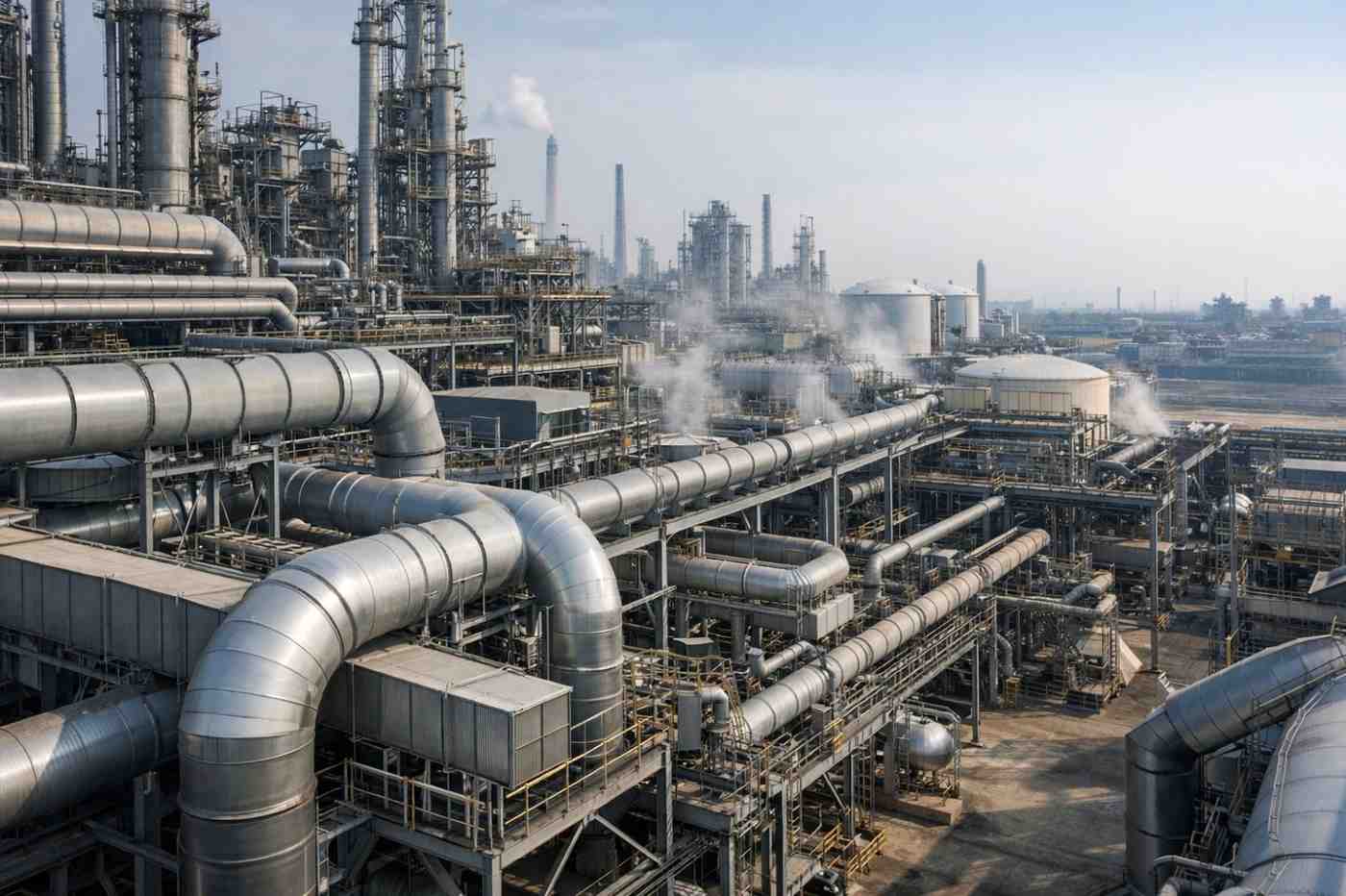
Industrial exhaust systems are not just moving air. They handle acid fumes, moisture, and corrosive gases every single day. Yet, many plants still use GI ducting by default—only to face rust, leakage, and frequent maintenance shutdowns.
Is GI still the right choice? Or is FRP a better long-term solution?
This comprehensive guide breaks down the comparison clearly, helping you make an informed decision for your industrial exhaust system.
Fiberglass Reinforced Plastic (FRP) ducting is engineered for demanding industrial environments where corrosion is a constant concern.
FRP ducting is made from fiberglass reinforced plastic combined with chemical-resistant resins. It is specifically designed for industrial environments where corrosion is a concern.
Resistant to acid fumes, chemicals, and moisture in aggressive environments
Significantly lighter than metal ducts, reducing load on support structures
Smooth inner surface improves airflow efficiency and reduces pressure drop
Non-corrosive and non-conductive, eliminating rust and electrical hazards
GI (Galvanized Iron) ducting has been the standard in HVAC systems for decades, but it has specific limitations in corrosive environments.
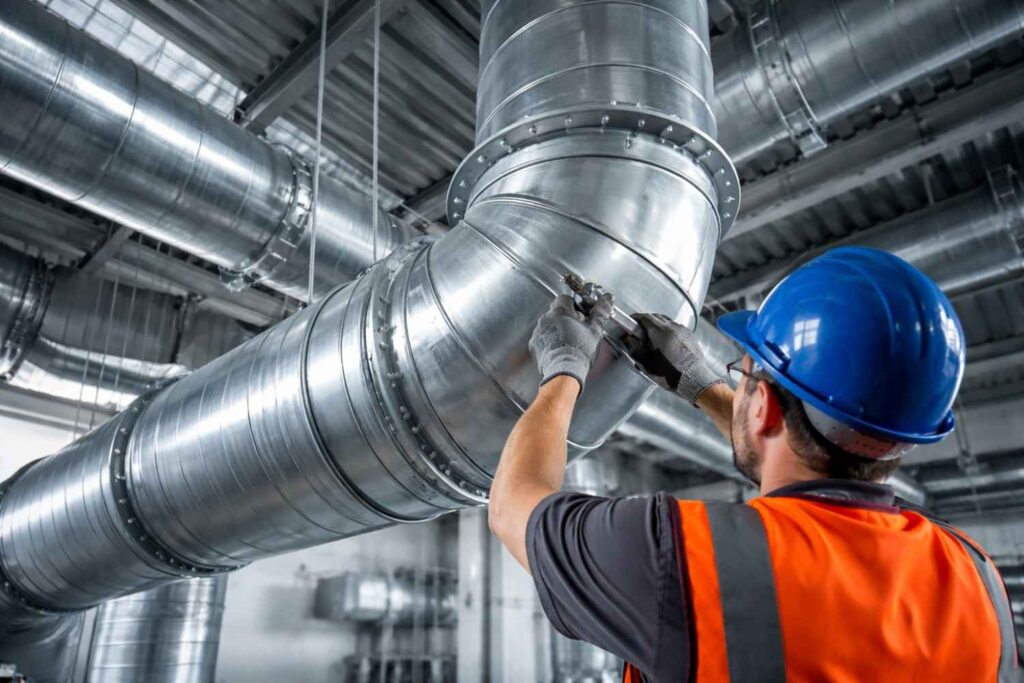
GI (Galvanized Iron) ducting is the standard material used in HVAC systems. It consists of steel coated with zinc to delay rusting.
GI works well, but only under the right conditions. In environments with chemical exposure or high moisture, GI ducting can fail prematurely, leading to costly downtime and replacements.
Our FRP specialists can evaluate your specific operating conditions and recommend the optimal ducting solution for your facility.
This is where most industrial failures begin. Understanding how materials respond to corrosive environments is critical.
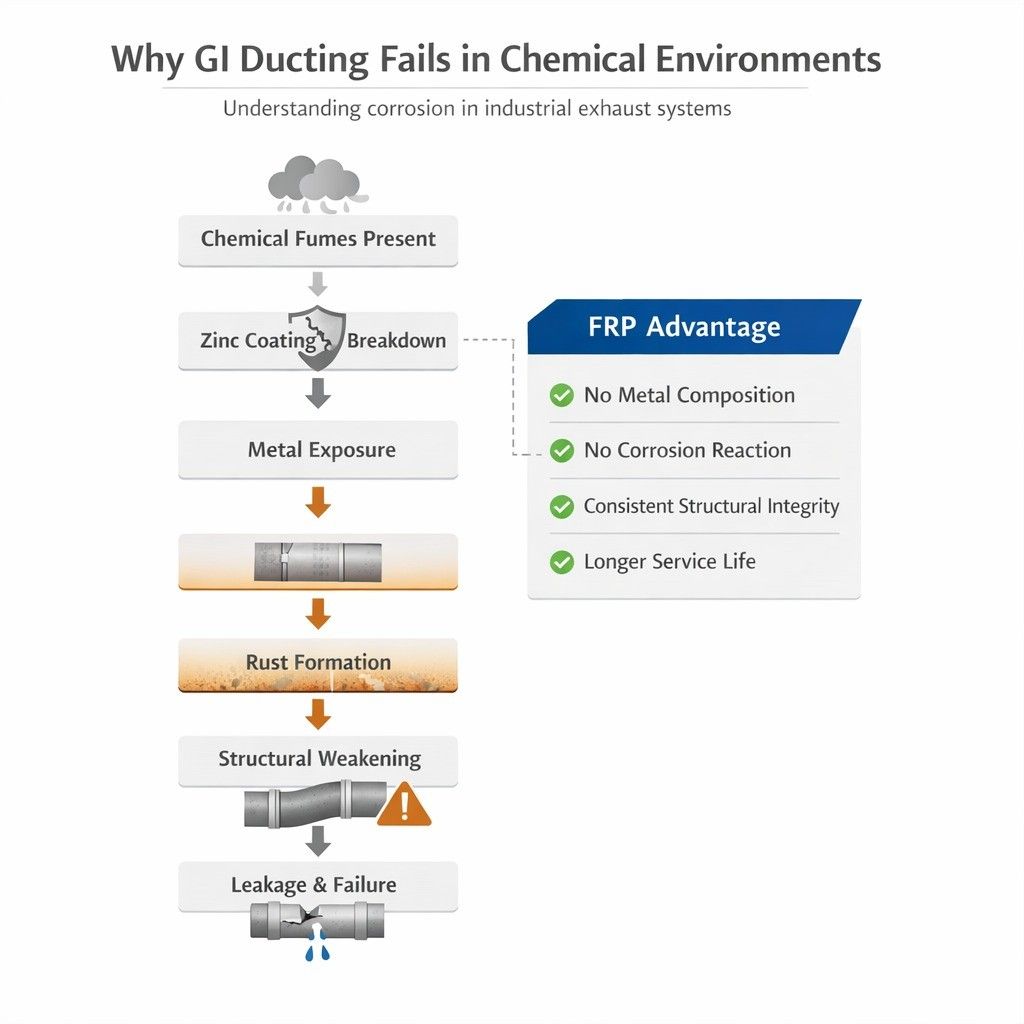
In environments with the following chemicals, GI duct life reduces significantly:
⚠Chlorine
⚠Sulphur dioxide
⚠Hydrochloric acid
⚠High humidity
The average automotive manufacturer loses $22,000 per minute of downtime caused by corrosion-related equipment failure. While this is auto-specific, it illustrates the broader financial pain of corrosion across heavy industries. Source: Keronite Industrial Analysis
FRP does not rely on a protective coating. It is inherently resistant.
If you are comparing materials, this is what matters most. Use this table to evaluate which solution fits your specific needs.
| Factor | FRP Ducting | GI Ducting |
|---|---|---|
| Corrosion Resistance | Excellent | Poor in chemical environments |
| Weight | Lightweight | Heavy |
| Lifespan | 20–30 years | 5–10 years (corrosive areas) |
| Maintenance | Low | High |
| Installation | Easier | Standard |
| Initial Cost | Higher | Lower |
| Lifecycle Cost | Lower | Higher |
| Chemical Resistance | High | Limited |
| Airflow Efficiency | Smooth | Moderate |
Real-world insights from industry professionals facing corrosion challenges.
This is a genuine professional discussion—one of the best real-world accounts of material selection challenges:
“A mechanical engineer designing an exhaust system for a sulfuric acid environment asked whether galvanized duct with high-performance paint was viable. A fellow engineer responded from direct experience: ‘Plastic or fiberglass would be best. It is only a question of time before paint fails.'”
“Another engineer added: ‘I had a very unpleasant time recently, changing out galvanised equipment pad covers for stainless on the roof of a facility, because the acid fumes had rotted the galvanising off the covers, allowing them to rust and get holes.'”
FRP ducting is significantly lighter than GI, offering practical benefits in real-world installations.
FRP’s lightweight advantage is especially useful in:
This is where many decisions go wrong. Understanding total cost of ownership is critical.
Key Takeaway: Lower upfront cost does not mean lower total cost.
When you factor in maintenance, repairs, replacements, and downtime costs over 20–30 years, FRP typically delivers 30–40% lower total cost of ownership compared to GI in corrosive environments.
The break-even point usually occurs within 5–7 years, after which FRP becomes significantly more economical.
Our team can help you calculate the true lifecycle cost for your specific application and recommend the optimal solution.
Material selection should always match operating conditions. Temperature is a critical factor.
Always evaluate these factors:
If your system handles aggressive environments, FRP is not optional—it is necessary.
Continuous exposure to corrosive chemicals demands FRP's inherent resistance
Sulfuric, hydrochloric, and other acid fumes require FRP protection
High moisture and chemical exposure make FRP the only practical choice
Coastal humidity and salt spray require FRP's corrosion resistance
GI is not obsolete. It just needs the right application.
Still unsure what fits your system? Start with these critical questions.
Identify all chemicals your system will handle. Acids, bases, chlorine, sulfur dioxide, and other corrosive substances require FRP. Clean air systems can use GI.
High humidity and condensation accelerate corrosion in GI systems. FRP handles moisture without degradation, making it ideal for wet environments.
If you need 20+ years of service, FRP is the better investment. For shorter-term applications (5-10 years), GI may be acceptable if conditions are favorable.
GI requires ongoing maintenance, repainting, and repairs. FRP has minimal maintenance needs. Calculate total cost of ownership, not just upfront cost.
GI failures cause unexpected downtime and costly repairs. FRP’s reliability means fewer disruptions. In critical operations, FRP’s uptime advantage justifies the higher initial cost.
The region itself plays a critical role in material selection decisions.
Industries such as Oil & Gas, Petrochemicals, and Water Treatment are increasingly shifting toward corrosion-resistant materials. Manufacturers with experience in fiberglass systems across these sectors continue to support this transition with engineered solutions.
Extreme corrosion and high temperatures make FRP essential for reliability
Complex chemical processes require FRP's superior resistance
Moisture and chemical exposure make FRP the standard choice
Exhaust systems benefit from FRP's durability and low maintenance
“The HVAC industry is increasingly turning to FRP ductwork. FRP’s high-strength characteristics combined with its lightweight nature, cost-efficiency, material integrity, durability, and minimal maintenance requirements allow it to outperform other materials on the market.”
Source: VPC Fiberglass
Our FRP specialists are ready to help you design and implement the perfect ducting solution for your industrial application
GI ducting has been the standard for years. But industrial environments have changed.
FRP ducting addresses these challenges directly. The right choice depends on your environment—not on what has always been used.
Common questions about FRP and GI ducting answered by industry experts.
Yes, initially. But over time, FRP is often more cost-effective due to lower maintenance and longer life. When you factor in repainting, repairs, and replacements over 20-30 years, FRP typically delivers 30-40% lower total cost of ownership in corrosive environments.
In suitable environments, FRP ducting can last 20–30 years with minimal maintenance. This is significantly longer than GI ducting in corrosive environments, which typically lasts only 5-10 years before requiring replacement.
Not always. GI is still suitable for clean air and dry environments. The choice depends on your specific operating conditions. For corrosive or humid environments, FRP is the better choice. For clean, dry applications, GI remains a cost-effective option.
FRP ducting is the preferred choice for acid exhaust systems due to its inherent corrosion resistance. Sulfuric acid, hydrochloric acid, and other corrosive fumes will quickly degrade GI ducting, while FRP remains unaffected.
Yes. FRP performs well in UV exposure, moisture, and harsh weather conditions. It is particularly suitable for rooftop installations, coastal environments, and outdoor exhaust systems where GI would quickly corrode.
Evaluate your operating conditions: chemical exposure, temperature, humidity, expected lifespan, and maintenance budget. If chemicals or moisture are present, FRP is the better choice. For clean, dry applications, GI may be sufficient. Consulting with an FRP specialist ensures you make the optimal decision for your specific needs.
Reviewing your exhaust conditions early in the design stage can prevent long-term failures and save significant costs.
You can explore how FRP ducting systems are designed for industrial applications with our team of experienced engineers.
