Address
Busubait Fiberglass Factory
P.O Box 63113, Dammam 31516
Kingdom of Saudi Arabia
Work Hours
Monday to Friday: 7AM - 7PM
Weekend: 10AM - 5PM

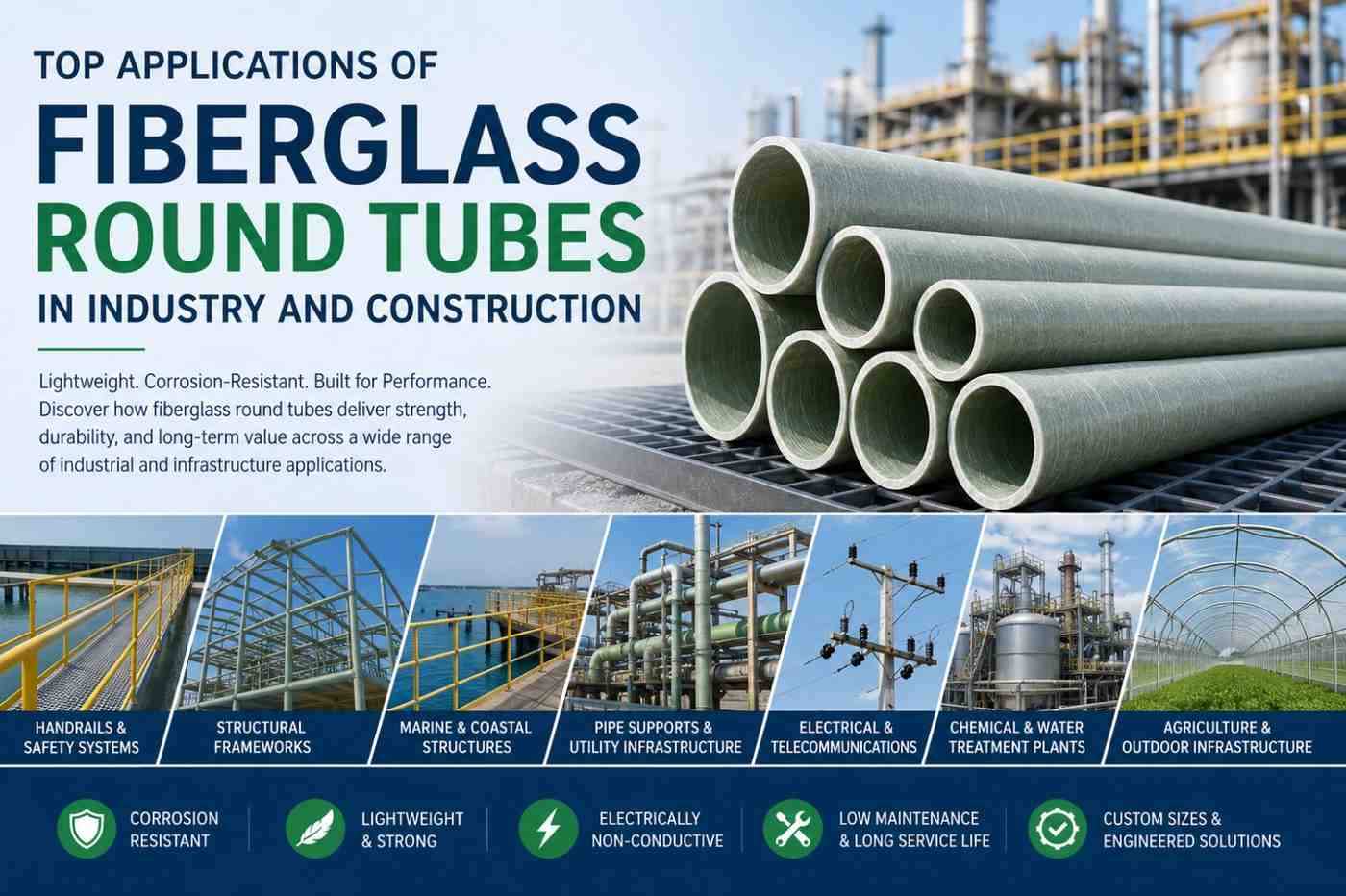
Material selection is one of the most important decisions in any industrial or construction project. While steel and aluminum have been trusted structural materials for decades, today’s projects demand more than just strength. Engineers and industrial buyers are increasingly looking for materials that can withstand harsh environments, reduce maintenance costs, and deliver reliable performance throughout the asset’s lifecycle.
This shift has brought fiberglass structural products into the spotlight. Manufactured using the pultrusion process, these structural profiles combine excellent mechanical strength with corrosion resistance, lightweight construction, and electrical insulation. As a result, they are now widely used across industries ranging from petrochemicals and water treatment to marine infrastructure and power generation.
Whether you’re designing a new facility, upgrading existing infrastructure, or evaluating alternatives to traditional metals, understanding where fiberglass round tubes perform best can help you make a more informed specification.
Discover how Busubait’s pultruded profiles can optimize your industrial projects.
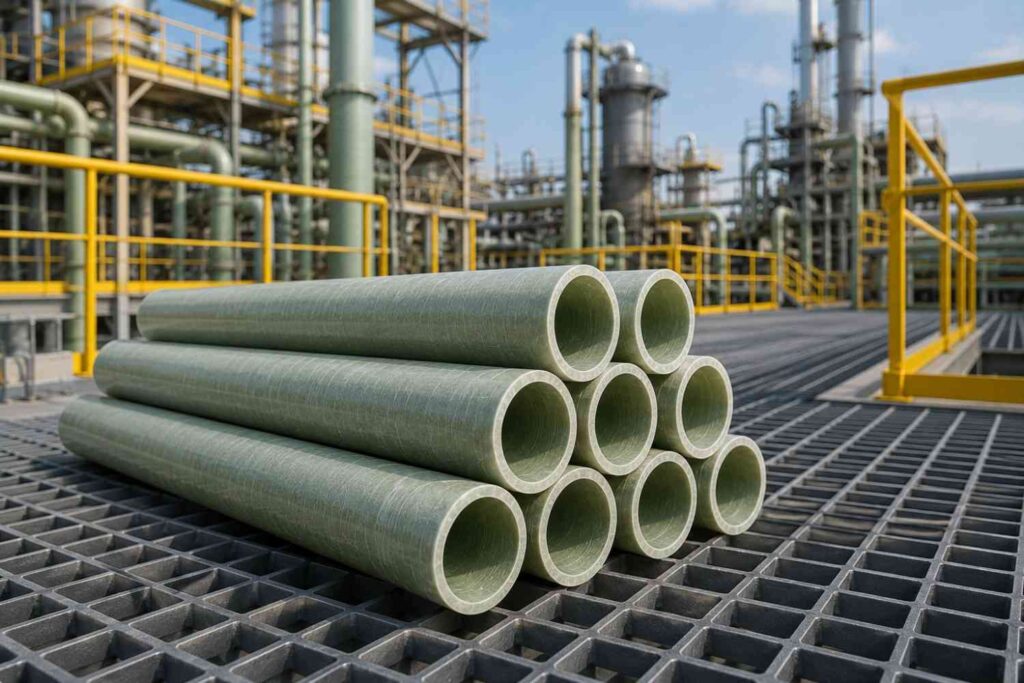
Fiberglass round tubes are hollow structural profiles manufactured by reinforcing glass fibers with thermosetting resin through a continuous pultrusion process. This manufacturing method produces components with uniform dimensions, excellent strength, and consistent quality, making them suitable for demanding industrial applications.
Unlike conventional steel tubes that depend on protective coatings to resist corrosion, fiberglass structural tubes are inherently resistant to moisture, chemicals, salt spray, and many corrosive industrial environments. They also offer electrical and thermal insulation, making them ideal for applications where conductive materials pose operational or safety challenges.
These characteristics have made fiberglass round tubes a preferred material for structural support systems, safety installations, equipment frames, utility infrastructure, and marine applications where long-term durability is essential.
For buyers evaluating structural materials, fiberglass isn’t simply a substitute for steel—it offers a different set of performance advantages that can significantly reduce maintenance requirements and improve the total cost of ownership.
Fiberglass round tubes are part of the same structural profile family. Discover our complete range of fiberglass gratings and pultruded profiles designed for demanding industrial applications.
The performance of fiberglass round tubes begins with the manufacturing process itself.
Pultrusion is a continuous production method where bundles of glass fibers are pulled through a resin bath before passing through a heated die that shapes and cures the material into a rigid structural profile. Unlike fabrication methods that rely on welding or mechanical joining, pultrusion creates a profile with continuous reinforcement throughout its length, resulting in excellent structural consistency.
Uniform manufacturing ensures reliable fit and predictable structural performance across every profile.
Continuous glass reinforcement provides excellent strength while keeping the overall weight significantly lower than comparable steel sections.
Smooth, uniform surfaces improve appearance while reducing maintenance requirements.
Carefully selected resin systems help the finished profile withstand aggressive chemicals, moisture, and outdoor exposure.
Controlled manufacturing produces profiles designed for decades of service in demanding industrial environments.
Because of these characteristics, pultruded fiberglass round tubes have become a trusted choice for engineers seeking structural materials that require minimal maintenance without compromising performance.
Every material has strengths and limitations. What makes fiberglass round tubes stand out is their ability to address several engineering challenges simultaneously, particularly in environments where traditional metals struggle.
One of the biggest reasons industries choose fiberglass is its resistance to corrosion. Unlike steel, fiberglass does not rust when exposed to moisture, chemicals, saltwater, or humid conditions. This makes it particularly suitable for petrochemical plants, wastewater treatment facilities, desalination plants, and marine infrastructure where corrosion is a constant concern.
Industrial environments often expose structural components to acids, alkalis, solvents, and process chemicals. By selecting the appropriate resin system, fiberglass round tubes can maintain their performance even in highly aggressive operating conditions, reducing the need for frequent replacements.
Fiberglass round tubes offer an impressive strength-to-weight ratio. Their lightweight construction makes transportation, handling, and installation easier while still providing the structural performance required for many industrial applications. In projects with elevated structures or difficult installation conditions, this weight reduction can also lower labor and equipment costs.
Weather and UV resistance is another key advantage. Outdoor installations must withstand prolonged exposure to sunlight, rain, humidity, and fluctuating temperatures. Fiberglass round tubes designed for exterior use resist weathering and UV degradation, making them suitable for long-term infrastructure and outdoor industrial projects.
Unlike steel and aluminum, fiberglass is naturally non-conductive. This property makes it an excellent material for electrical utilities, substations, telecommunications infrastructure, and industrial facilities where electrical safety is a priority.
In electrical installations, conductive materials can introduce additional safety considerations. Fiberglass is naturally non-conductive and has low thermal conductivity, making it well suited for applications near energized equipment, substations, cable support systems, and utility infrastructure.
Perhaps the greatest advantage for industrial buyers is reduced maintenance. Since fiberglass does not require painting to prevent rust or frequent repairs caused by corrosion, maintenance teams can spend less time on structural upkeep and more time focusing on critical operations.
Resistance to chemicals and harsh environments is built into the material itself. This durability contributes to improved asset reliability and lower lifecycle costs, particularly in highly corrosive industrial environments.
Steel continues to play a vital role in construction and industrial engineering. However, projects operating in corrosive environments increasingly require materials that offer greater durability with lower maintenance demands.
Industrial facilities such as refineries, chemical processing plants, wastewater treatment facilities, and offshore platforms expose structural materials to continuous moisture, aggressive chemicals, and salt-laden air.
In these environments, conventional steel often requires protective coatings, regular inspections, and periodic maintenance to prevent corrosion. Even galvanized steel eventually deteriorates under prolonged exposure to harsh conditions.
Fiberglass round tubes eliminate many of these concerns. Because they are inherently corrosion resistant, they maintain their structural integrity without rusting, reducing maintenance requirements and extending service life.
This makes them particularly valuable for applications where access for repairs is difficult or where operational downtime is costly.
Weight has a significant impact on construction schedules, transportation, and installation efficiency.
Fiberglass round tubes are considerably lighter than comparable steel members, making them easier to move, lift, and install. In many projects, this translates into:
For large infrastructure projects, these efficiencies can contribute to meaningful savings in both labor and project timelines.
In electrical installations, conductive materials can introduce additional safety considerations.
Fiberglass is naturally non-conductive and has low thermal conductivity, making it well suited for applications near energized equipment, substations, cable support systems, and utility infrastructure.
Common examples include:
These insulating properties help improve worker safety while expanding the range of applications where fiberglass can be specified.
Initial material cost is only one part of the overall investment. Industrial buyers increasingly evaluate materials based on their total cost of ownership, which includes maintenance, repairs, downtime, and replacement over the asset’s lifespan.
Fiberglass round tubes often deliver long-term value by reducing many of these ongoing expenses. Their corrosion resistance minimizes the need for protective coatings, while their durability lowers replacement frequency and maintenance labor.
For facilities operating in corrosive or high-maintenance environments, these lifecycle savings can outweigh higher upfront material costs, making fiberglass a cost-effective solution over the life of the project.
Fiberglass round tubes have evolved far beyond being simple structural components. Today, they are specified across a wide range of industrial and construction projects because they offer a unique combination of strength, corrosion resistance, lightweight construction, and electrical insulation.
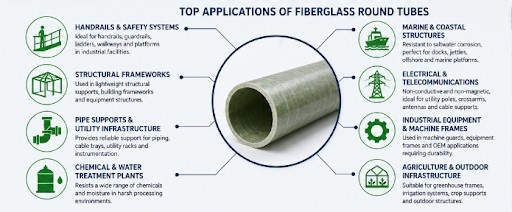
Worker safety is a priority in every industrial facility, and handrail systems are among the most common applications of fiberglass round tubes. Unlike steel handrails that require periodic painting and corrosion protection, fiberglass systems maintain their performance with minimal maintenance even in aggressive environments.
Fiberglass round tubes are commonly used in:
Because fiberglass is electrically non-conductive, these systems are also well suited for electrical utilities and power generation facilities.
Explore our fiberglass gratings and pultruded profiles designed for safety applications.
Not every structural application requires heavy steel sections. In many industrial projects, secondary structures must be lightweight, corrosion resistant, and easy to install without compromising durability.
Fiberglass round tubes are increasingly incorporated into:
Their lightweight design also reduces lifting requirements during installation, helping contractors improve productivity on site.
Saltwater is one of the most aggressive environments for structural materials. Steel components installed near coastlines often require protective coatings, frequent inspections, and ongoing maintenance to prevent corrosion.
Fiberglass round tubes eliminate many of these maintenance challenges, making them an excellent choice for marine infrastructure.
Common applications include:
For operators managing coastal assets, reducing corrosion-related maintenance often translates directly into lower operating costs.
Industrial facilities rely on extensive piping networks to transport water, chemicals, steam, and process fluids. Supporting these systems requires structural members that remain stable despite continuous exposure to moisture and chemicals.
Fiberglass round tubes are frequently used to fabricate:
These applications are particularly common in petrochemical facilities, desalination plants, and water treatment projects.
Check out our FRP piping and fittings for complete infrastructure support.
Electrical infrastructure presents unique material challenges because safety and electromagnetic performance are equally important.
Fiberglass round tubes are naturally non-conductive and non-magnetic, making them an ideal solution for applications where metallic components may create electrical hazards.
Typical applications include:
These properties make fiberglass especially valuable for power generation, substations, telecommunications, and renewable energy projects.
Few industries place greater demands on structural materials than chemical processing and water treatment facilities. Constant exposure to aggressive chemicals, moisture, and corrosive atmospheres can significantly shorten the lifespan of conventional metals.
Fiberglass round tubes are widely specified in these environments because they maintain their structural performance with minimal maintenance.
Common applications include:
For industrial operators, this durability contributes to improved asset reliability and lower lifecycle costs.
Explore our FRP chemical storage tanks and fiberglass process vessels.
Original Equipment Manufacturers (OEMs) increasingly integrate fiberglass structural profiles into custom equipment because they offer excellent strength without adding unnecessary weight.
Fiberglass round tubes are commonly incorporated into:
Their ease of fabrication also allows manufacturers to develop customized solutions for specialized industrial applications.
Agricultural and outdoor infrastructure projects often expose structural materials to sunlight, moisture, fertilizers, and changing weather conditions. These environments demand materials that remain stable with minimal upkeep.
Fiberglass round tubes are widely used in:
Their resistance to UV radiation and corrosion makes fiberglass a dependable choice for long-term outdoor applications.
Across every industry discussed above, one common theme emerges: organizations are no longer selecting materials based solely on initial purchase price. Instead, engineers and asset owners are prioritizing solutions that reduce maintenance, improve safety, and extend operational life.
Fiberglass round tubes address these priorities by combining corrosion resistance, lightweight construction, and reliable structural performance in a single material. Whether supporting a chemical processing facility, reinforcing marine infrastructure, or improving safety on industrial platforms, they help reduce lifecycle costs while enhancing long-term reliability.
Selecting a structural material isn’t just about meeting technical specifications. Industrial buyers and project engineers also evaluate installation costs, maintenance requirements, operational reliability, and the expected service life of the asset.
One of the primary reasons engineers specify fiberglass round tubes is their ability to maintain structural integrity in environments that rapidly degrade conventional materials.
Unlike carbon steel, fiberglass does not rust when exposed to moisture, saltwater, or many industrial chemicals. With the appropriate resin system, it can also resist acids, alkalis, and corrosive process fluids commonly found in industries such as petrochemicals, water treatment, mining, and marine infrastructure.
This longer service life offers several practical benefits:
For industrial facilities where corrosion is an ongoing maintenance challenge, extending the lifespan of structural components can significantly improve overall project economics.
Maintenance activities consume both time and budget. Structures that require regular inspection, repainting, or corrosion repair can increase operational costs and disrupt production schedules.
Fiberglass round tubes help reduce these maintenance demands by eliminating many of the issues associated with metal corrosion.
Industrial buyers benefit from:
For facilities operating continuously, such as refineries, chemical plants, or desalination plants, minimizing unplanned maintenance can have a meaningful impact on productivity.
Installation efficiency plays an important role in project schedules, particularly for large industrial developments.
Because fiberglass round tubes are significantly lighter than comparable steel sections, they simplify transportation, handling, and installation.
This translates into several project advantages:
These efficiencies become even more valuable in remote industrial sites, offshore facilities, and projects with limited access.
Safety is one of the most overlooked benefits of fiberglass structural materials.
Unlike steel or aluminum, fiberglass is naturally non-conductive and non-magnetic. These properties make it particularly suitable for electrical utilities, substations, telecommunications infrastructure, and industrial facilities where electrical hazards must be minimized.
Fiberglass round tubes contribute to safer working environments by offering:
For facilities with strict occupational safety requirements, these properties add another layer of long-term value.
Procurement decisions increasingly focus on the Total Cost of Ownership (TCO) rather than simply comparing purchase prices.
Although fiberglass round tubes may have a higher upfront cost than some conventional materials, they often deliver better long-term value by reducing:
When evaluated over decades of service, these savings can outweigh the initial investment, particularly in highly corrosive industrial environments.
Selecting the right fiberglass round tube involves more than choosing a diameter from a catalogue. Each project presents unique structural, environmental, and operational requirements that should influence material selection.
Working with an experienced manufacturer during the design stage can help ensure long-term performance while avoiding costly specification errors.
Every structural application must be designed to safely withstand anticipated loads.
Before selecting a fiberglass round tube, engineers should evaluate:
Choosing a profile based solely on dimensions without considering structural calculations can lead to underperforming systems.
Not all industrial environments expose materials to the same chemicals.
Different resin systems provide varying levels of resistance to:
Matching the resin system to the operating environment helps maximize durability and service life.
Outdoor applications require materials that remain stable despite years of sunlight, rain, temperature fluctuations, and humidity.
When specifying fiberglass round tubes for external use, buyers should consider:
Profiles designed specifically for outdoor service offer improved long-term performance in these environments.
Fiberglass round tubes are available in a range of diameters and wall thicknesses to suit different structural requirements.
Selection should be based on:
Choosing an oversized profile may increase costs unnecessarily, while undersized profiles can compromise structural performance.
Every industrial project has unique engineering requirements. Standard catalogue products may not always provide the most efficient solution.
Working with an experienced manufacturer offers several advantages:
Choosing fiberglass structural profiles is not simply a purchasing decision—it’s an engineering decision. Overlooking key design considerations can reduce the long-term benefits that fiberglass offers.
Being aware of these common mistakes helps buyers make more informed decisions.
The lowest-cost option is not always the most economical over the life of the project. Evaluate total lifecycle costs including maintenance, service life, and replacement frequency.
Selecting a profile without proper engineering calculations can result in excessive deflection or insufficient structural capacity. Always verify design loads and safety factors.
Environmental exposure plays a significant role in fiberglass performance. Evaluate chemical exposure, UV radiation, saltwater environments, and operating temperatures.
Fiberglass profiles are available in many shapes, sizes, and resin systems. Partnering with an experienced manufacturer provides access to technical expertise and customized solutions.
Across industrial sectors, material selection is no longer driven solely by upfront costs. Asset owners, EPC contractors, and consulting engineers are increasingly evaluating materials based on their ability to reduce maintenance, improve operational reliability, and deliver long-term value.
Fiberglass round tubes align well with these evolving priorities. Their combination of corrosion resistance, lightweight construction, electrical insulation, and structural strength makes them suitable for applications where traditional materials often struggle to provide consistent performance.
As industries continue to modernize infrastructure and prioritize lifecycle cost optimization, fiberglass structural profiles are expected to play an even greater role in future industrial and construction projects.
For industrial buyers, fiberglass round tubes are no longer considered a niche alternative—they are becoming a strategic material choice for projects where reliability and durability matter.
Choosing the right fiberglass profile is only part of the decision. Working with an experienced manufacturing partner helps ensure the material is properly matched to the project’s structural, environmental, and operational requirements.
With nearly three decades of experience serving industries across Saudi Arabia and the GCC, Busubait Fiberglass manufactures high-quality pultruded fiberglass profiles and engineered FRP solutions for demanding industrial applications. From oil and gas facilities to desalination plants, chemical processing units, power generation projects, and infrastructure developments, Busubait supports customers with products designed for long-term performance in corrosive environments.
The lowest-cost option is not always the most economical over the life of the project. Evaluate total lifecycle costs including maintenance, service life, and replacement frequency.
Tailored fiberglass profiles to meet project-specific structural, environmental, and operational requirements.
From design consultation and profile selection to manufacturing and delivery, we provide comprehensive project support.
Modern production facilities and strict quality standards ensure reliable, high-performance products for every application.
Industrial buyers benefit from:
Whether your project requires standard fiberglass round tubes or customized structural profiles, partnering with an experienced FRP manufacturer can help improve installation efficiency, reduce lifecycle costs, and ensure long-term reliability.
| Property | Fiberglass Round Tubes | Carbon Steel | Galvanized Steel | Aluminum |
|---|---|---|---|---|
| Corrosion Resistance | Excellent (Inherent) | Poor (Requires Coating) | Moderate (Coating Degrades) | Moderate |
| Weight | Lightweight (1/4 of Steel) | Heavy | Heavy | Lightweight |
| Electrical Conductivity | Non-Conductive | Highly Conductive | Highly Conductive | Highly Conductive |
| Maintenance | Very Low | High (Painting/Rust) | Moderate-High | Moderate |
| Lifecycle Cost | Low (Long-term Value) | High | Moderate-High | Moderate |
| Chemical Resistance | Excellent (Resin-dependent) | Poor | Poor | Moderate |
| UV Resistance | Excellent (With UV Protection) | N/A (Requires Paint) | N/A (Requires Paint) | Good |
| Installation Ease | Excellent (Lightweight) | Difficult (Heavy) | Difficult (Heavy) | Good |
Yes. Fiberglass round tubes can be cut, drilled, and machined using carbide- or diamond-tipped tools. To maintain corrosion resistance and long-term durability, exposed edges should be sealed with a compatible resin or protective coating after fabrication.
No. Fiberglass round tubes are naturally non-conductive, so they do not require grounding like metallic structural members. However, the overall electrical system should always comply with local electrical and safety codes.
Yes, provided they are properly engineered. Their suitability depends on factors such as load requirements, span length, wall thickness, and resin system. Structural calculations should always be performed before specifying fiberglass tubes for load-bearing applications.
In properly designed applications, fiberglass round tubes can provide decades of service with minimal maintenance. Their lifespan depends on environmental exposure, resin selection, UV protection, and operating conditions, but they generally outlast unprotected steel in corrosive environments.
Fiberglass round tubes contribute to sustainability by reducing maintenance, replacement frequency, and protective coating requirements over their service life. Their long operational lifespan can help lower the overall environmental impact of industrial infrastructure projects.
Industrial buyers should look for manufacturers that comply with recognized quality standards such as ISO 9001 and ensure products are manufactured using appropriate ASTM specifications or project-specific engineering requirements. Product testing data and resin certifications are also valuable when evaluating suppliers.
Fiberglass round tubes have become an essential structural material for modern industry and construction. Their ability to resist corrosion, reduce maintenance, simplify installation, and deliver reliable long-term performance makes them an ideal choice for applications ranging from industrial safety systems and equipment supports to marine infrastructure and water treatment facilities.
For engineers and procurement professionals, selecting the right fiberglass round tube involves more than comparing product specifications. It requires evaluating structural loads, environmental conditions, resin compatibility, and the total lifecycle cost of the installation. Making these considerations early in the design process can lead to safer, more durable, and cost-effective projects.
If you’re planning an industrial or infrastructure project that requires custom fiberglass round tubes, pultruded structural profiles, or application-specific engineering guidance, Busubait’s engineering team can help you identify the right solution for your operating environment and performance requirements.
Whether you need standard fiberglass round tubes or custom-engineered solutions, our team is ready to help you select the right material for your project.
Explore our range of fiberglass structural products or contact our specialists to discuss your project requirements.
