Address
Busubait Fiberglass Factory
P.O Box 63113, Dammam 31516
Kingdom of Saudi Arabia
Work Hours
Monday to Friday: 7AM - 7PM
Weekend: 10AM - 5PM
Address
Busubait Fiberglass Factory
P.O Box 63113, Dammam 31516
Kingdom of Saudi Arabia
Work Hours
Monday to Friday: 7AM - 7PM
Weekend: 10AM - 5PM

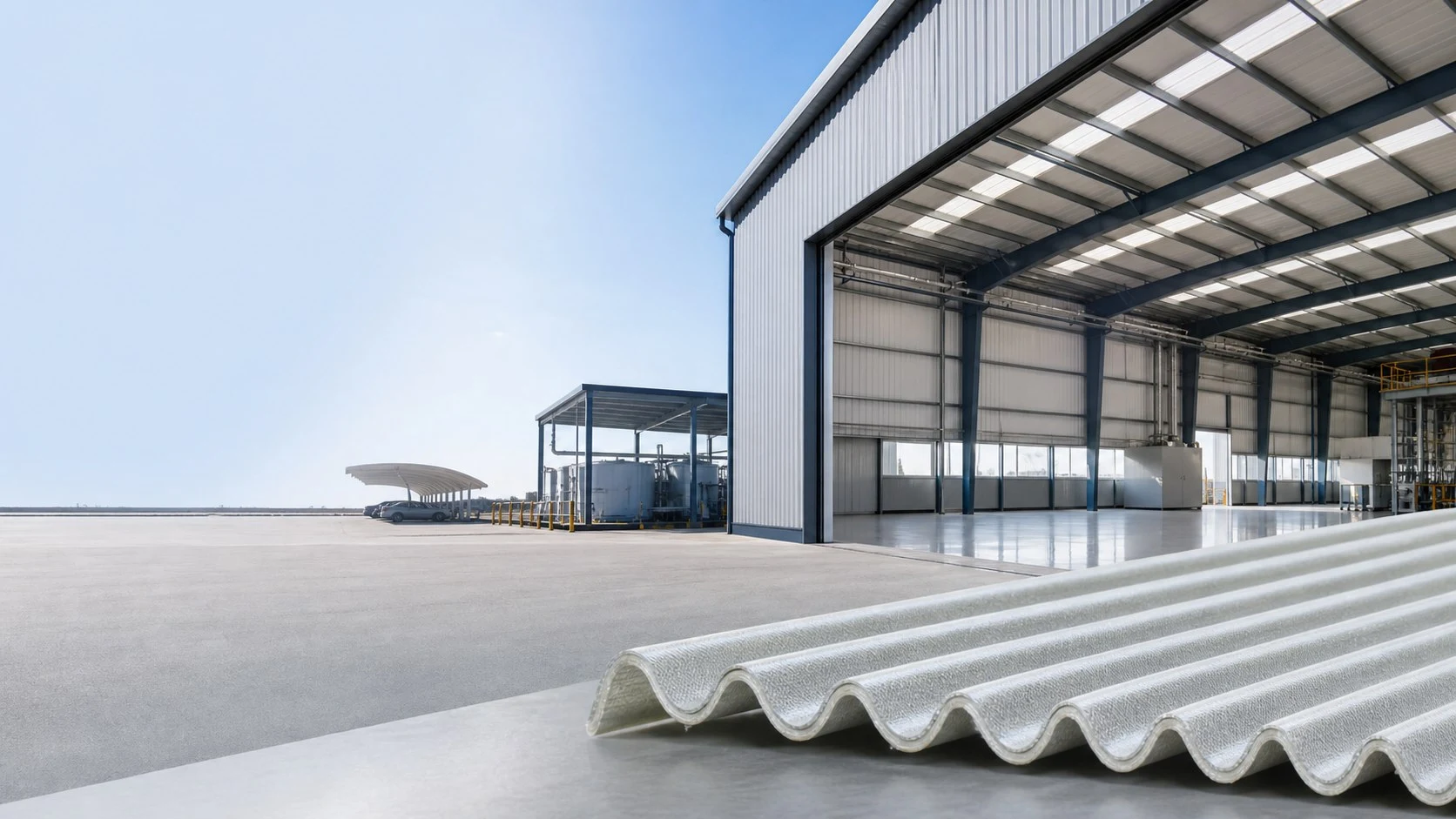
Fiberglass roof panels are used across industrial plants, warehouses, skylights, parking shades, canopies, equipment covers, and agricultural buildings. This guide explains where FRP roofing panels work best, how translucent and opaque options differ, and what buyers should check before selecting a panel for long-term outdoor use.
Roofing materials in factories, warehouses, and outdoor structures face more than rain. They may also be exposed to moisture, salt-laden air, chemical fumes, strong sunlight, and regular temperature changes.
Fiberglass roof panels can meet several of these requirements when they are correctly specified. They are used for complete roofs, daylighting sections, canopies, parking shades, equipment covers, and wall cladding.
This guide explains the main applications of fiberglass roof panels, why project teams select them, and what buyers should check before placing an order.
Fiberglass roof panels are composite sheets made using glass-fibre reinforcement and a resin system. They are also commonly described as FRP roofing panels, GRP roof panels, or fiberglass roofing sheets.
Their shape, colour, surface finish, thickness, and level of translucency can vary. Corrugated and profiled panels are commonly used because their shape can provide stiffness and support water drainage.
Some panels are opaque and provide full shade. Others are translucent and allow diffused natural light into the building. The right construction depends on the intended use: a warehouse skylight may require different properties from a panel installed above chemical-processing equipment.
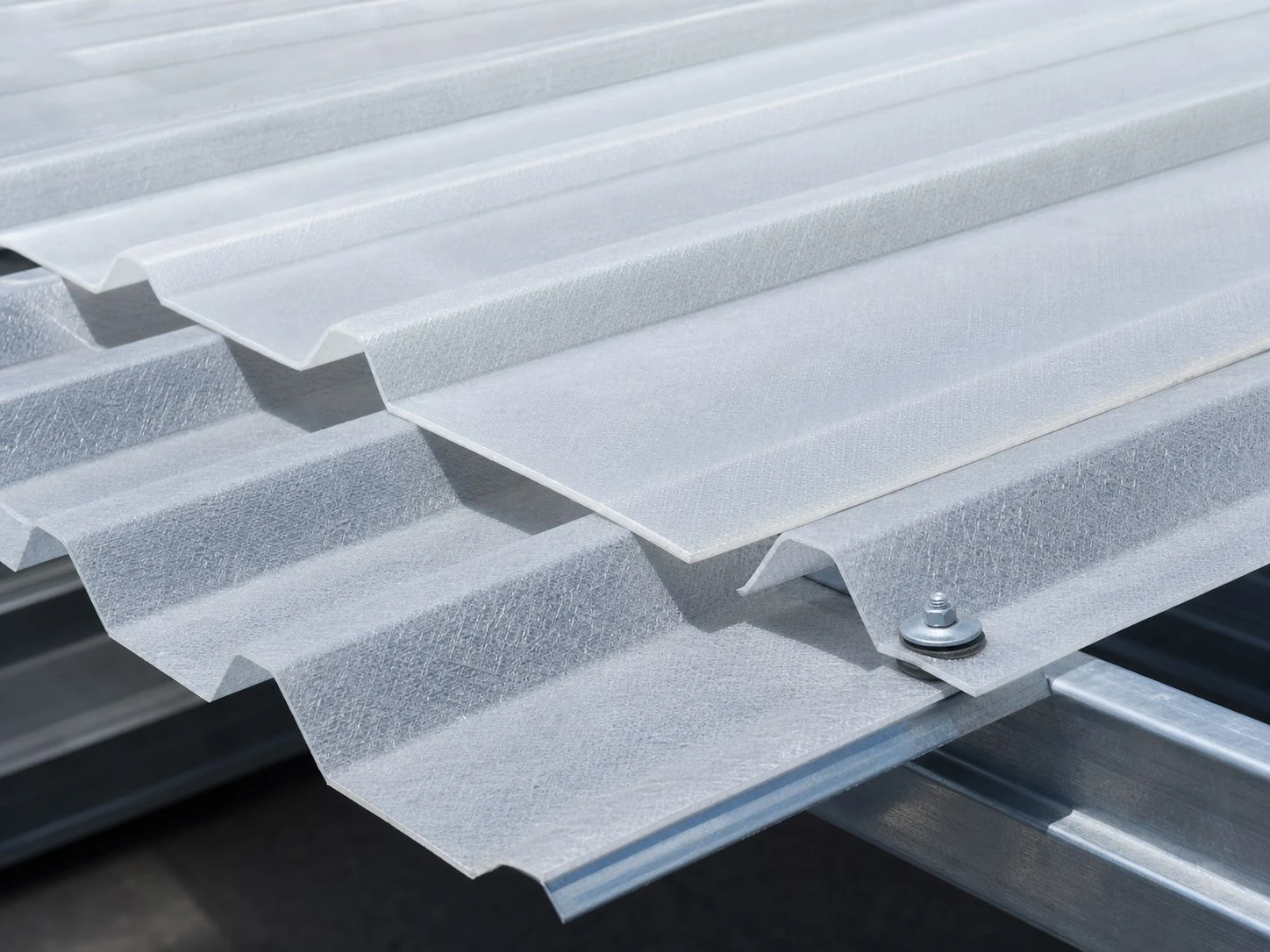
Fiberglass roofing panels are considered where conventional roofing may face corrosion, weight, or daylighting limitations. Performance still depends on panel design, resin system, installation, and actual service conditions.
Fiberglass does not rust like unprotected steel, making FRP useful in humid, coastal, wastewater, and certain industrial environments. Suitability must be checked against the exact chemicals, fumes, temperature, and exposure level.
Lower weight can simplify transport, handling, and installation. It does not remove the need to confirm wind loads, spans, support spacing, fixings, and safe access.
Translucent panels bring diffused daylight into selected roof areas. Opaque panels provide shade, privacy, and a consistent coloured finish.
Panels can match corrugated or trapezoidal profiles for roofs, canopies, equipment covers, window shades, and replacements. Provide drawings, dimensions, or a sample wherever possible.
Fiberglass roof panels can serve industrial, commercial, agricultural, and outdoor structures. These twelve applications show where they are most often considered.
Industrial buildings may face moisture, vapours, dust, washdown, or process fumes. FRP panels may cover production halls, chemical-handling zones, utility buildings, pump and treatment areas, maintenance workshops, and process spaces.
They can be useful where metal sheets need repeated coating or replacement. Confirm that the resin and panel construction match the operating environment; “chemical resistant” never means resistance to every chemical.
Fiberglass sheets can form complete roof sections, side cladding, or daylighting strips. A warehouse may combine opaque panels over most of the roof with translucent panels at planned intervals.
Diffused light can serve selected aisles during the day, but the layout must control heat, glare, and uneven lighting while supporting drainage, ventilation, and maintenance.
FRP roofing may be considered for chemical storage buildings, dosing areas, wastewater facilities, pickling or process zones, ventilated equipment shelters, and buildings near scrubbers or exhaust systems.
Final selection must consider chemical compatibility, temperature, concentration, ventilation, and exposure duration.
Salt-laden air, humidity, and condensation can accelerate corrosion in exposed metal roofing. FRP panels may suit coastal warehouses, workshops, utility structures, parking areas, and equipment shelters.
The complete system still matters: FRP sheets do not protect unsuitable metal supports, fasteners, flashings, or accessories.
Translucent fiberglass panels can introduce natural light without large areas of glass. Common locations include factories, warehouses, workshops, agricultural structures, covered loading areas, and commercial shelters.
Plan light transmission, glare, solar heat gain, UV protection, spacing, waterproofing, and maintenance access as part of the full roof design. Translucent sheets should be clearly identified because they may not be safe to walk on.
Fiberglass panels can cover employee and visitor parking, residential compounds, commercial properties, schools, public facilities, and industrial plant parking.
Use opaque panels for stronger shade or translucent panels where partial daylight is preferred. Busubait’s company profile lists roofing sheets and car park shades among its major products.
A fiberglass canopy can protect building entrances, inter-building walkways, security access areas, passenger waiting zones, loading points, and office-to-plant connections.
Design must consider drainage, wind, support spacing, appearance, and pedestrian movement. See Busubait’s fiberglass canopy solutions.
FRP covers can protect transformers, generators, air compressors, pumps, control equipment, and small utility installations from direct sunlight, dust, and rain.
They must preserve ventilation, maintenance access, electrical clearances, and equipment-manufacturer requirements. Busubait’s profile includes genset, air-compressor, and transformer canopies.
Applications include greenhouses, livestock shelters, farm storage, equipment sheds, hatcheries, and agricultural work areas. Greenhouses may use translucent sheets to distribute daylight; livestock and storage structures may use opaque or partly translucent roofing.
Assess heat build-up, ventilation, light needs, cleaning chemicals, and long-term UV exposure.
FRP panels may serve pump houses, maintenance workshops, guard rooms, service kiosks, chemical-dosing shelters, control buildings, and outdoor storage areas.
They can also integrate with fiberglass enclosures for a more complete corrosion-resistant structure. Learn about industrial fiberglass enclosures.
Smaller profiled panels can create shades above windows, doors, access points, or wall-mounted equipment. They reduce direct sun and rain exposure and can support a consistent appearance across industrial buildings.
Fiberglass profiles can clad industrial building walls, equipment enclosures, washdown areas, utility structures, chemical-storage buildings, and partitioned outdoor work areas.
Panels must be designed and fixed for wall use, accounting for wind pressure, orientation, joints, corners, openings, and support spacing.
The choice depends on how the space will be used. Too much daylighting can create glare or unwanted heat, so a planned combination is often more practical than using one panel type across the complete roof.
| Selection factor | Translucent fiberglass panels | Opaque fiberglass panels |
|---|---|---|
| Main purpose | Bring diffused natural light into the structure. | Provide shade and full visual coverage. |
| Common application | Skylights, roof-light strips, and greenhouses. | Complete roofs, canopies, walls, and equipment covers. |
| Main design concern | Light transmission, glare, heat gain, and UV exposure. | Colour, finish, weathering, and visual appearance. |
| Indoor effect | Can reduce artificial lighting during suitable daylight hours. | Creates a darker, more fully shaded interior. |
| Specification need | Define the required level and distribution of light. | Confirm the required colour, opacity, and finish. |
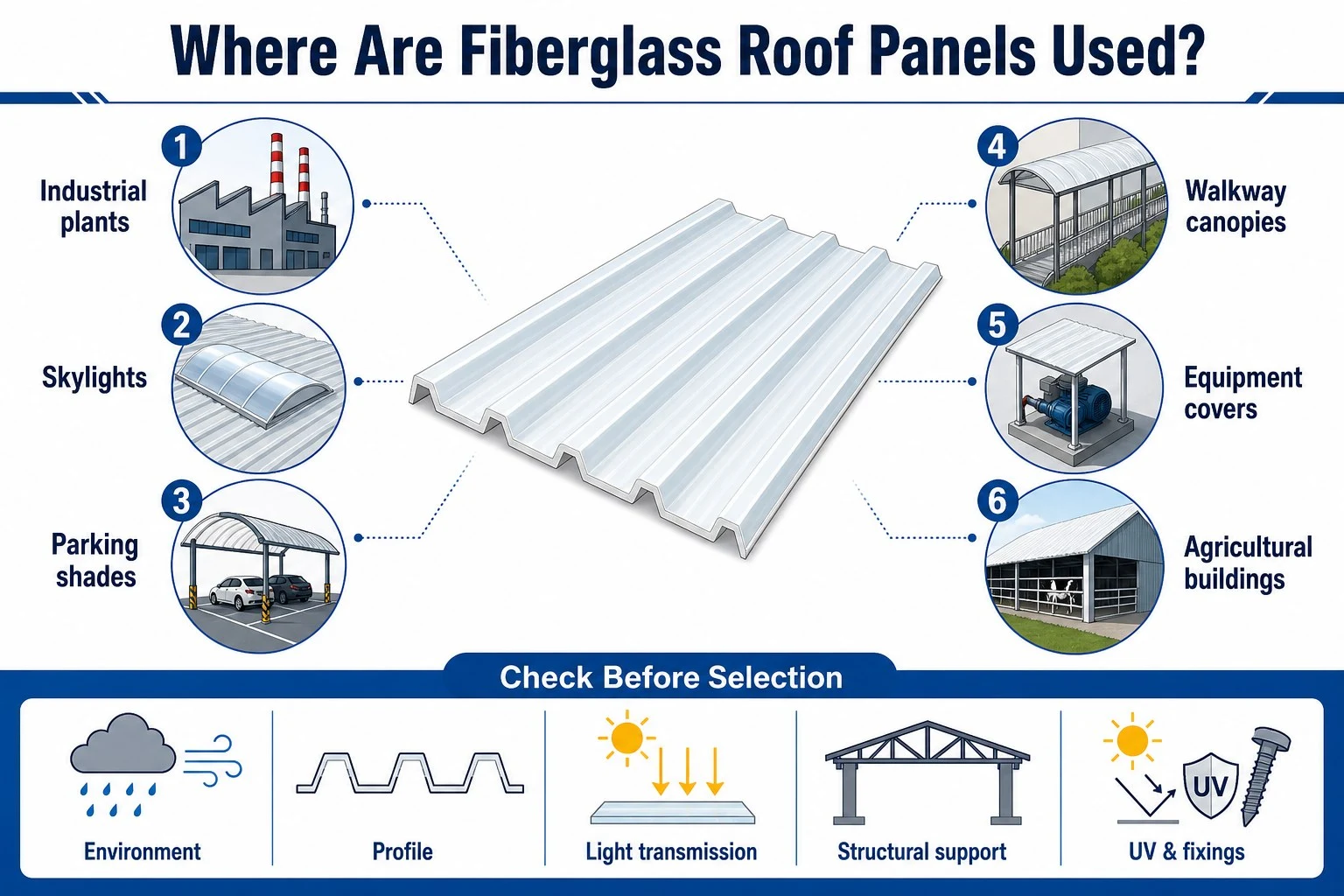
Review the complete operating and installation conditions before selecting a panel.
Identify chemical fumes or splashes, salt-laden air, humidity or condensation, UV exposure, dust, cleaning chemicals, high or changing temperatures, and possible impact. This guides the resin system, surface protection, and panel construction.
Decide whether the project needs an opaque, translucent, corrugated, flat, or custom-profiled panel. A daylight strip, parking roof, and transformer canopy do not have identical requirements.
Confirm corrugation or rib dimensions, sheet width and length, side and end overlaps, purlin spacing, ridge and edge details, flashings, and connections to adjoining sheets. When drawings are unavailable, provide a sample.
Do not select by thickness alone. The responsible engineer must consider wind pressure and uplift, panel span, support spacing, fixing locations, impact, maintenance access, drainage, slope, and additional loads. Review manufacturer span data with project requirements.
Discuss UV protection and the external surface system. Older translucent sheets may yellow, become brittle, crack, or expose fibres when product choice, surface protection, or installation is unsuitable. Ask about UV stabilisation, inspection, and long-term outdoor performance.
Define fastener materials, washers, sealing components, hole size and clearance, fixing position, overlaps, compatible sealants, thermal movement, and flashings around edges and penetrations. Do not overtighten; follow the manufacturer’s approved installation method.
Projects may specify fire, smoke, structural, electrical, or authority requirements. Request the relevant product data and test documents before approval; “FRP roofing sheet” alone does not confirm compliance.
Many problems begin before installation because the enquiry or specification omits important details.
A detailed enquiry helps the manufacturer understand the requirement and prepare a more relevant proposal.
If some details remain undecided, share the application and operating conditions first. The manufacturer can then identify what is needed for the next stage.
Saudi projects often involve strong solar exposure, outdoor equipment, industrial facilities, coastal conditions, and large covered areas.
Common applications include factory and warehouse roofing, industrial daylighting, chemical and wastewater buildings, car parking shades, equipment and transformer canopies, covered walkways, utility shelters, window shades, and agricultural structures.
Conditions vary by site. Coastal projects may emphasise salt exposure, while inland industrial facilities may focus on UV, heat, dust, or chemical fumes.
Busubait is a Saudi-owned fiberglass manufacturer established in Dammam in 1997. Its company profile lists roofing sheets, parking shades, window shades, canopies, industrial enclosures, and custom-made FRP products within its broader portfolio.
View Busubait’s fiberglass product range and selected fiberglass projects.
They may be suitable for factories, warehouses, treatment facilities, workshops, and utility buildings. The selected panel must match the structural, chemical, fire, temperature, and weathering requirements of the project.
Long-term sunlight and weather exposure can affect composite roof sheets, particularly when the product, surface protection, or installation is unsuitable. Confirm UV protection, expected outdoor performance, maintenance guidance, and warranty terms with the manufacturer.
Roof panels should not be assumed to be safe walking surfaces. Maintenance access must follow the project safety plan and use approved walkways, platforms, or other fall-protection arrangements.
A manufacturer may be able to produce or recommend a compatible profile. Accurate profile measurements, drawings, or a physical sample are normally needed to assess the requirement.
Opaque panels provide shade, while translucent panels introduce natural light. Many warehouses use a planned combination, but the layout should account for glare, solar heat gain, indoor use, and safe roof access.
Leaks may result from incorrect overlaps, unsuitable sealants, poor flashing details, misplaced fasteners, overtightening, thermal movement, or damage around penetrations. Correct installation is as important as selecting the panel itself.
Fiberglass roof panels can provide roofing, daylighting, shade, cladding, and protection for industrial equipment. The right panel depends on its application, profile, exposure, light requirement, support structure, fixing system, and project specification.
When these factors are reviewed together, FRP roofing can be a practical option for industrial, commercial, agricultural, and outdoor projects. Busubait can review your application, drawings, dimensions, environmental conditions, and fabrication approach.
Discuss Your Fiberglass Roofing Requirement