Address
Busubait Fiberglass Factory
P.O Box 63113, Dammam 31516
Kingdom of Saudi Arabia
Work Hours
Monday to Friday: 7AM - 7PM
Weekend: 10AM - 5PM

Saudi Arabia’s industrial sector is expanding rapidly. New desalination plants, petrochemical facilities, mining projects, and infrastructure developments are creating a growing demand for materials that can survive harsh operating conditions.
That is exactly why FRP (Fiber Reinforced Plastic) has become a preferred material across industries.
Steel structures corrode. Concrete deteriorates in aggressive chemical environments. Maintenance costs increase over time. For many industrial operators, the challenge is no longer just installation cost — it is lifecycle performance.
“If you are searching for an experienced FRP supplier in Saudi Arabia, this guide explains what matters, which industries depend on FRP systems, and how to evaluate the right manufacturing partner for long-term industrial projects.”
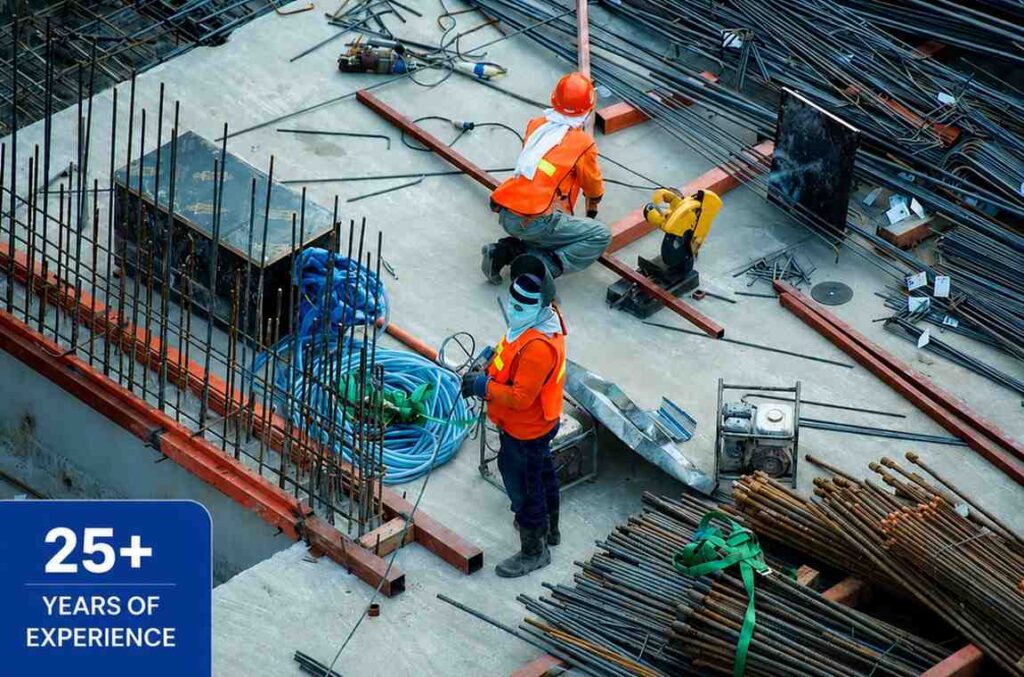
Saudi Arabia’s industrial environments are demanding. High temperatures, coastal humidity, chemical exposure, and saline conditions can quickly damage traditional materials. FRP solves many of these problems.
Excellent corrosion resistance in chemical environments. Unlike conventional steel, FRP is engineered to resist chemical attack and moisture.
Lightweight compared to steel with a high strength-to-weight ratio. Suitable for customized fabrication and easier installation.
Lower maintenance requirements and longer service life in coastal and industrial conditions. Reduces expensive downtime.
Not all fiberglass manufacturers operate at the same level. In industrial applications, fabrication quality directly affects safety, lifespan, and maintenance costs. A reliable FRP supplier should offer more than just manufacturing.
Custom dimensions, specific resin systems, engineering calculations, and specialized fabrication standards.
ISO 9001:2015 certification, resin compatibility, structural integrity, and lamination quality.
Busubait has supplied systems for Saudi Aramco, SABIC, SWCC, Ma’aden, NEOM, and Saudi Electricity Company.
Busubait Fiberglass Company, established in Dammam in 1997, operates from Saudi Arabia’s petrochemical industrial hub and manufactures a wide range of industrial fiberglass products for regional projects.
Modern fiberglass manufacturing covers a wide range of applications beyond simple storage.
Chemical, Water, Wastewater
Desalination, Chemical Transfer
Walkways, Platforms, Access
Acid Fumes, Ventilation
Many industrial projects require specialized fiberglass products that are not available off-the-shelf. Busubait manufactures several customized fiberglass systems for industrial and infrastructure applications.
FRP adoption continues to grow across multiple industries due to its durability.
Corrosion is a constant challenge in oil and gas facilities. FRP systems help reduce maintenance downtime and extend equipment lifespan.
Saudi Arabia is one of the world’s largest desalination markets. Saltwater exposure creates severe corrosion conditions.
Mining operations often involve acidic and chemically aggressive environments. FRP systems are essential for process vessels and storage.
Saudi Arabia’s Vision 2030 initiatives are increasing demand for durable, low-maintenance construction materials like composite rebars and profiles.
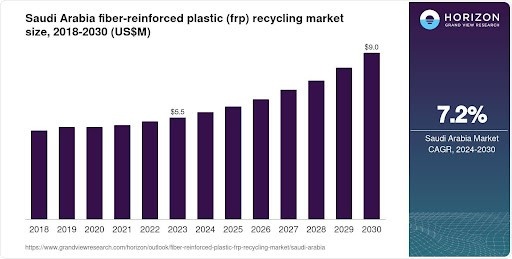
The growing demand for FRP systems in Saudi Arabia and the Middle East.
Market Value (2023)
Saudi Arabia FRP Composites Market
Projected CAGR
One of the highest growth rates in the region
Daily Desalination
World's leading producer of desalinated water
Desalination Projects
Value of active projects in Saudi Arabia
| Cost of Corrosion & Environmental Impact | ||
|---|---|---|
| Metric | Value / Impact | Source |
| Global cost of corrosion | Estimated at 3–4% of global GDP annually | NACE International |
| Savings from corrosion prevention | USD 375–875 billion annually through proper corrosion-control practices | Outokumpu / NACE |
| Environmental impact of GFRP rebars | 17% lower CO₂ emissions compared to steel across lifecycle | MDPI Life-cycle Study |
| Saudi Vision 2030 industrial investment | USD 144 billion in foreign investments supporting industrial growth | Gulf News / Vision 2030 |
Industrial composite demand is increasing globally, but Saudi Arabia represents a particularly strong growth market due to:
According to multiple market reports, demand for FRP products in the Middle East is rising because industries are prioritizing lifecycle durability over short-term material cost.
This shift is especially visible in:
Choosing an FRP supplier is not only about manufacturing capacity. Industrial buyers also evaluate project support, engineering reliability, and long-term service performance.
Busubait Fiberglass Company has operated in Saudi Arabia since 1997 and manufactures industrial fiberglass systems from its Dammam facility.
The company operates between Jubail Industrial City and Dammam industrial zones, allowing easier access to major petrochemical and infrastructure projects.
The company documentation references projects and approvals involving:
For industrial procurement teams, supplier experience in similar environments often reduces project risk.
Common queries about FRP Tanks & Industrial Fiberglass Systems.
FRP tanks can typically last between 25 to 50 years when the correct resin system is selected for the specific chemical environment. Factors like temperature, UV exposure, chemical concentration, and fabrication quality all influence service life. Poor resin selection is one of the most common reasons for premature tank failure.
FRP tanks offer superior corrosion resistance compared to conventional steel tanks, especially in chemical processing, desalination, and wastewater environments. Unlike steel, FRP does not rust, scale, or require frequent protective coatings, which helps reduce long-term maintenance costs and downtime.
Both materials are used in chemical storage, but FRP is often preferred for large industrial acid storage systems because of its higher structural strength, better temperature resistance, and ability to handle customized engineering requirements. HDPE may work well for smaller or lower-temperature applications, but FRP generally performs better in demanding industrial environments.
Most FRP tank failures are linked to incorrect resin selection, inadequate corrosion barriers, poor lamination quality, or improper installation practices. In highly aggressive chemical environments, even a structurally strong tank can fail if the resin system is not compatible with the stored media.
While FRP systems may sometimes have a higher initial cost than carbon steel, the lifecycle cost is often significantly lower. FRP reduces expenses related to corrosion repair, repainting, shutdowns, and replacement, making it a cost-effective solution over a 10–20 year operating period.
Yes. Many industrial projects in Saudi Arabia, including sectors like petrochemicals, desalination, and mining, use FRP systems extensively. Experienced manufacturers such as Busubait have supplied fiberglass systems for organizations including Saudi Aramco, SABIC, SWCC, and Ma’aden
The resin depends on the concentration and operating temperature of the sulfuric acid. Vinyl ester resins are commonly selected because they provide strong chemical resistance in aggressive acidic environments. However, resin compatibility should always be verified through proper engineering evaluation before fabrication.
Before selecting an FRP manufacturer, evaluate engineering support, resin availability, industrial references, and local manufacturing capabilities. In corrosive environments, proper engineering matters far more than short-term savings.
• Does the supplier provide engineering support?
Industrial FRP systems often require custom calculations and resin selection.
• What resin systems are available?
Different chemicals require different corrosion-resistant resin systems.
• Does the supplier have industrial references?
Previous project execution matters.
• Are products manufactured locally?
Local fabrication can reduce delivery delays and improve coordination.
• Is quality testing documented?
Testing and quality control are critical for industrial systems.
Some buyers select FRP products purely based on pricing.
That can become expensive later.
Poor-quality FRP systems may fail due to:
In corrosive environments, proper engineering matters far more than short-term savings.
Saudi Arabia’s industrial growth strategy continues to increase demand for advanced composite materials.
The industries expected to drive future FRP demand include:
As maintenance costs rise across heavy industries, FRP systems are increasingly viewed as long-term infrastructure investments rather than alternative materials.
With decades of experience and a broad range of fiberglass solutions, Busubait supports industrial sectors across Saudi Arabia with engineered FRP systems.