Address
Busubait Fiberglass Factory
P.O Box 63113, Dammam 31516
Kingdom of Saudi Arabia
Work Hours
Monday to Friday: 7AM - 7PM
Weekend: 10AM - 5PM
Address
Busubait Fiberglass Factory
P.O Box 63113, Dammam 31516
Kingdom of Saudi Arabia
Work Hours
Monday to Friday: 7AM - 7PM
Weekend: 10AM - 5PM

Busubait Fiberglass • Dammam, Saudi Arabia
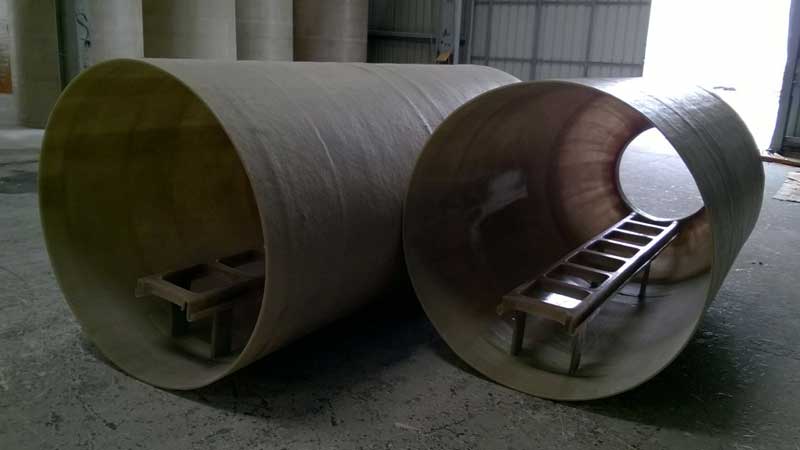
Busubait manufactures FRP tanks in Saudi Arabia for industrial storage applications where corrosion, chemical exposure, moisture, or demanding site conditions make conventional materials difficult to maintain.
Our fiberglass reinforced plastic tanks can be manufactured in vertical and horizontal configurations for water, wastewater, chemicals, process liquids, and other industrial services. Tank dimensions, construction materials, resin systems, connections, and accessories can be selected according to the application and project requirements.
Based in Dammam, Busubait supports industrial projects across Saudi Arabia with custom FRP fabrication and related fiberglass products.
Built around your application
Industrial tanks often need to handle more than simple liquid storage. Chemical exposure, outdoor conditions, moisture, corrosion, operating temperature, and site limitations can all affect material selection.
FRP, also known as fiberglass reinforced plastic, combines fiberglass reinforcement with a resin system selected for the intended service. This makes FRP tanks useful for many applications where corrosion resistance and lower maintenance requirements are important.
Busubait manufactures FRP tanks for project-specific industrial requirements rather than relying on one standard configuration for every application.
Tank configurations
FRP tanks can be built in different configurations depending on capacity, available space, stored liquid, installation conditions, and process requirements.
01 / Vertical
Vertical FRP tanks make efficient use of floor space and are commonly selected for stationary industrial storage.
Busubait can manufacture vertical tanks in different diameters, heights, and capacities based on the project requirement. Depending on the application, tanks can also include manways, nozzles, vents, drains, level connections, ladders, and access platforms.
Common applications include:
02 / Horizontal
Horizontal FRP tanks are useful where installation height is restricted or where the layout makes a horizontal configuration more practical.
They can be supplied with suitable supports or saddles and configured with the required inlet, outlet, vent, drain, and inspection connections.
Horizontal FRP tanks may be used for:
Corrosion is one of the main reasons industrial facilities consider FRP tanks instead of conventional metallic storage systems.
The fiberglass reinforcement provides structural support, while the selected resin system provides resistance to the service environment. The actual resin and construction must be selected according to factors such as the stored liquid, concentration, temperature, and operating conditions.
For applications involving aggressive acids, alkalis, or other chemicals, see Busubait's dedicated FRP Chemical Storage Tanks page.
Wastewater and effluent systems can expose tanks to moisture, treatment chemicals, and corrosive operating conditions.
FRP tanks can be manufactured for applications such as:
The tank construction should always be matched to the actual liquid and operating environment rather than selected only by capacity.
FRP can also be used for water-storage applications where corrosion resistance and low maintenance are important.
For projects requiring modular fiberglass panel tanks, Busubait provides a separate range of Fiberglass Panel Water Tanks.
Additional corrosion protection
Some corrosive applications require an additional thermoplastic corrosion barrier.
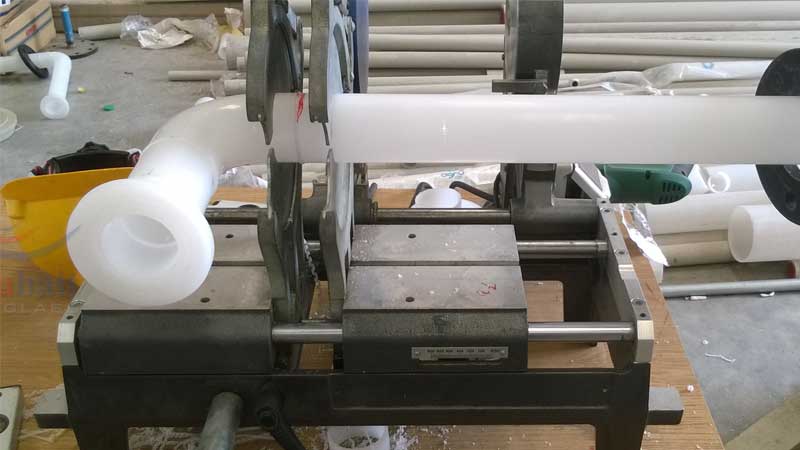
Dual-laminate construction combines an FRP structural shell with an inner thermoplastic liner. Depending on the service conditions, liner materials may include PP, PVC, CPVC, PVDF, PFA, or other compatible materials.
The correct liner should be selected according to the chemical, concentration, temperature, and project specification.
For detailed information on lined systems, see Fiberglass Tanks and Dual-Laminate Equipment. Busubait's dedicated dual-laminate page covers lined tanks and related equipment for corrosive chemical service.
Blue: FRP structural shell
Red: thermoplastic liner
Storage and process applications
FRP tanks are used across industrial facilities for different liquid-storage and process requirements.
Typical applications include:
FRP tanks can be configured for compatible acids, alkalis, salts, and other process chemicals using the appropriate resin or liner system.
Fiberglass tanks can be used for industrial and utility-water storage applications.
Tanks can support ETP, STP, and industrial wastewater systems.
FRP tanks are used to hold liquids required within manufacturing and processing operations.
Corrosion-resistant storage is useful where equipment is exposed to moisture, treatment chemicals, or saline environments.
FRP construction can be considered where conventional metallic tanks face recurring corrosion problems.
Tanks may be used for compatible process solutions and treatment systems.
FRP tanks can support storage requirements connected to plant utilities and treatment processes.
FRP suitability is application-specific. Material selection should be confirmed against the actual service conditions before fabrication.
Construction & material selection
An FRP tank is not defined by fiberglass alone. The resin system, reinforcement, corrosion barrier, wall construction, fabrication method, and accessories all affect how the tank performs.
Busubait's existing tank range includes resin options such as:
The right resin depends on the intended service. A resin suitable for water or mild service may not be suitable for an aggressive chemical environment.
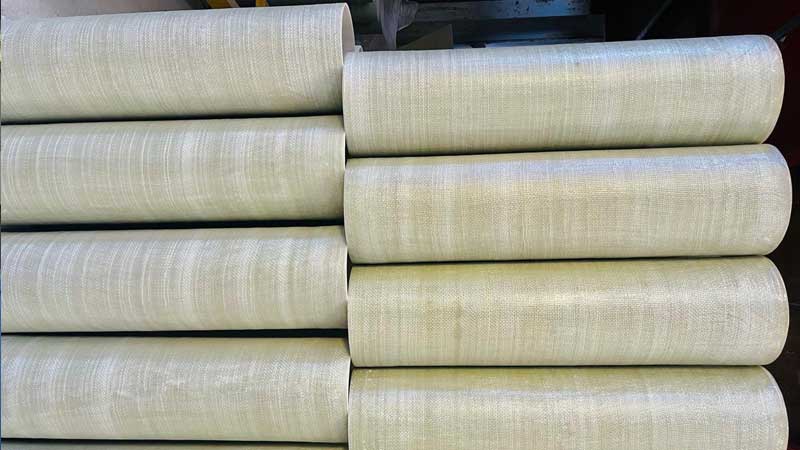
FRP tanks can be manufactured using methods such as filament winding and hand lay-up.
Filament winding uses controlled fiberglass reinforcement placement to build the structural portion of the tank.
Hand lay-up is useful for selected tank areas, fittings, attachments, complex shapes, and project-specific fabrication requirements.
The manufacturing method is selected according to the tank geometry, service conditions, structural requirements, and design specification.
Where standard FRP construction is not suitable for the required chemical service, a compatible thermoplastic liner may be considered.
The liner acts as the chemical-contact surface, while the FRP layer provides structural support.
For specialist liner selection, see Busubait’s dual-laminate equipment page.
FRP tanks may be designed and fabricated according to applicable project specifications and recognized industry standards.
Busubait’s tank construction references standards including BS, ASTM, ASME, and DIN. The exact standard used should depend on the tank design, service conditions, client specification, and project requirements.
Made to fit your project
Industrial projects rarely have identical tank requirements. Available space, operating conditions, piping layout, access, and capacity can all affect the final design.
Busubait can manufacture project-specific FRP tanks with configurations such as:
This gives project teams more flexibility when the tank needs to fit an existing plant layout or connect with surrounding equipment.
Why consider fiberglass?
Choosing a storage tank is not simply a question of capacity. The material has to suit the stored medium and the conditions around the tank.
01
FRP does not rust in the same way as carbon steel. With the correct resin and construction, it can be used in many environments where moisture or chemicals create corrosion problems for metallic equipment.
02
FRP generally provides a lower-weight solution than comparable steel structures. This can make transportation, handling, and installation easier depending on tank size and site conditions.
03
FRP construction allows tank dimensions, fittings, access arrangements, and other details to be adapted around a project.
04
FRP does not require the same corrosion-control approach as conventional steel tanks. This can reduce recurring work associated with rust removal, repainting, and coating repair in suitable applications.
05
Vertical, horizontal, lined, large-diameter, and other configurations can be manufactured according to service requirements.
FRP is not automatically the right material for every liquid or operating condition. Chemical compatibility, temperature, structural loading, and design requirements should be checked before the tank specification is finalized.
Project experience
Actual project experience is important when selecting an industrial FRP tank manufacturer.
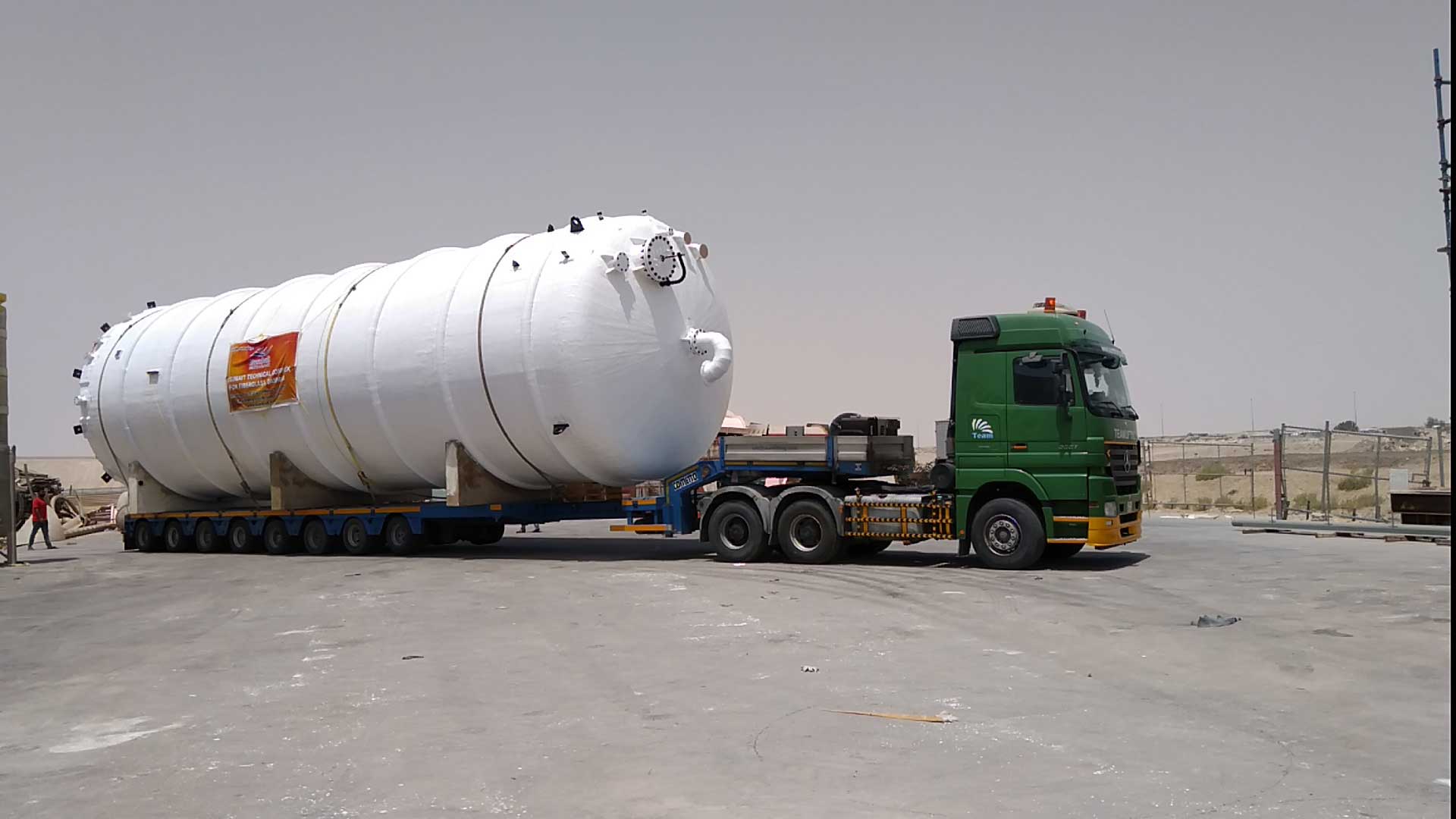
One example documented in Busubait's company profile is a sodium hydroxide storage tank for SWCC in Saudi Arabia. The project involved a tank with a capacity of 375,000 litres, approximately 7,000 mm in diameter and 11,300 mm in height.
This type of large industrial storage project shows the importance of designing the tank around the stored chemical, required capacity, dimensions, and plant conditions.
View Busubait ProjectsIndustrial sectors
Busubait manufactures fiberglass products for industrial sectors where corrosion resistance, custom fabrication, and project-specific construction are important.
FRP tank applications can be found in sectors such as:
Tank suitability should be assessed according to the actual service rather than the industry name alone.
Supporting your installation
A tank often forms part of a larger process or storage system.
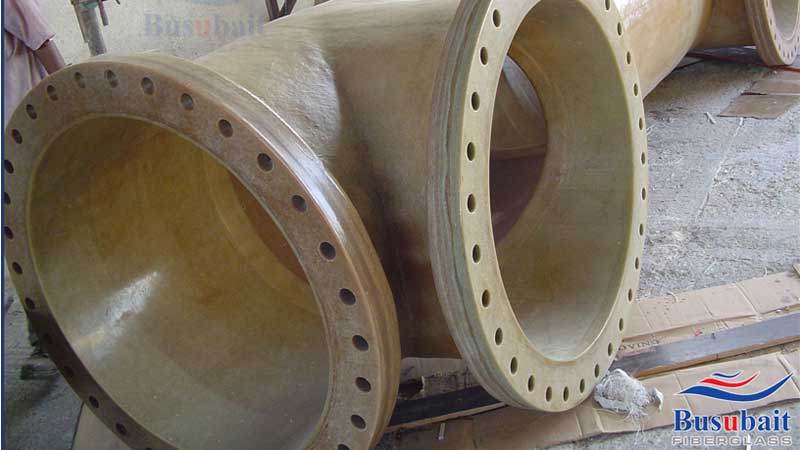
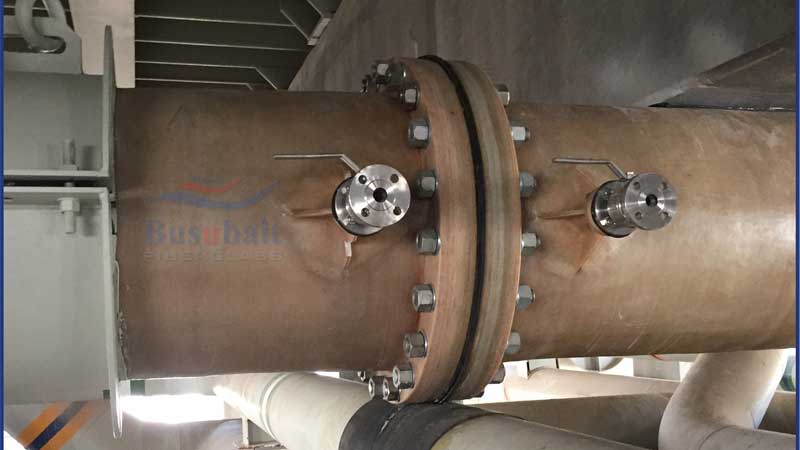
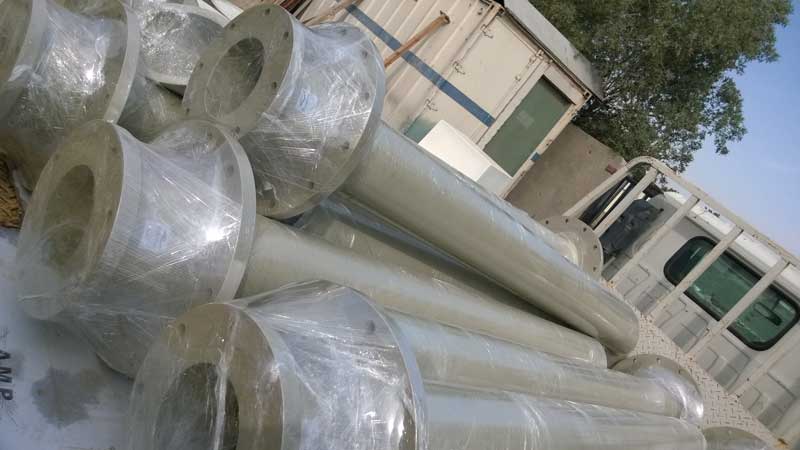
Busubait also manufactures related fiberglass equipment that can support industrial tank installations, including FRP piping and fittings, process equipment, access structures, and other custom fiberglass products.
This allows related FRP components to be considered together where a project requires tanks, piping, fittings, platforms, or process equipment.
Your questions, answered
FRP tanks are used for storing water, wastewater, process liquids, and compatible industrial chemicals. Their corrosion resistance makes them useful in applications where conventional metallic tanks may require frequent corrosion maintenance.
Yes. Busubait manufactures FRP tanks in vertical, horizontal, and project-specific configurations. Dimensions, connections, accessories, construction materials, and resin systems can be selected according to the application.
FRP means Fiberglass Reinforced Plastic, while GRP means Glass Reinforced Plastic. In industrial use, both terms commonly describe composite materials made using glass-fiber reinforcement and resin. The terminology often varies by market and project specification.
Yes, provided the resin system, corrosion barrier, and overall construction are compatible with the stored chemical and operating conditions. Aggressive chemical applications may require specialist resin systems or dual-laminate construction.
For detailed chemical-storage options, see Busubait's FRP Chemical Storage Tanks.
Yes. Vertical tanks are commonly selected where floor space is limited, while horizontal configurations may suit projects with height restrictions or specific layout requirements.
Busubait manufactures tanks in different capacities and dimensions according to project requirements. The company profile lists water and chemical storage tanks ranging from approximately 100 to 500,000 gallons, along with large-diameter and project-specific fiberglass tanks.
Resin selection depends on the stored medium, concentration, operating temperature, environmental exposure, and design conditions. Chemical compatibility should be reviewed before the tank construction is finalized.
No. A standard FRP tank uses fiberglass reinforcement and resin as its main construction system. A dual-laminate tank adds a thermoplastic liner on the chemical-contact surface, with FRP providing structural support.
LET’S DISCUSS YOUR PROJECT
Busubait manufactures custom FRP tanks in Saudi Arabia for industrial water, wastewater, chemical, process, and utility applications.
If your project requires a vertical tank, horizontal tank, large-diameter storage tank, corrosion-resistant FRP construction, or a related fiberglass storage solution, speak with the Busubait team about the project requirements.